
RTO in Ecommerce: Meaning, Cost and How to Cut It
RTO in ecommerce means the parcel came back undelivered. Why COD orders drive it, what one RTO costs a Shopify store, and the four fixes in order.
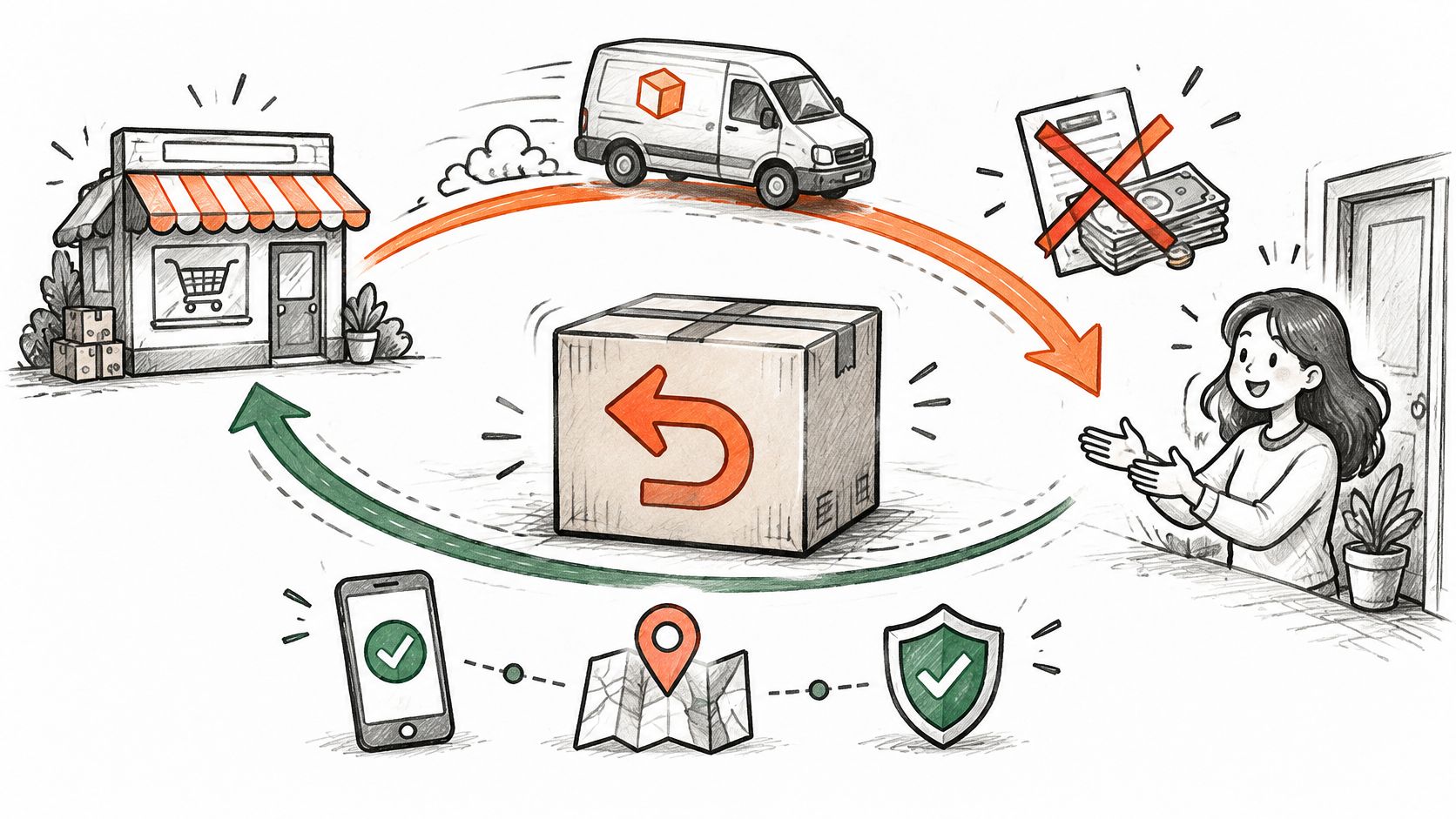
Parcels keep coming back to your pickup address. On COD that means the sale never completed, but the shipping work still gets paid for. You see the problem twice: returns stacking at the warehouse, and a second line on the courier invoice for carrying the same box back.
Three questions matter here: which orders should never have shipped, which deliveries could have been recovered, and what each failed shipment cost.
Table of Contents
- What RTO in Ecommerce Means
- What One RTO Actually Costs
- Why COD Orders Drive RTO
- RTO Causes, How to See Them in Shopify, and the Fix
- The Four COD Levers, in Order
- Where Securify and OTP+ fit
- Frequently Asked Questions About RTO in Ecommerce
What RTO in Ecommerce Means
RTO stands for Return to Origin. The courier could not complete the delivery, so the parcel travels back to your pickup address. For a COD order, no cash was ever collected.
A non-delivery report, or NDR, sits earlier in the same sequence. It records a failed delivery attempt while the parcel is still in the courier's network, which leaves room to correct an address, reach the buyer, or schedule another attempt. The courier's attempt policy decides when that recoverable problem becomes a return.
You can watch the sequence play out inside one order. The courier's tracking page logs NDR remarks like "consignee unavailable" or "address incomplete", while the same order in Shopify still shows Fulfilled with Payment pending because nobody has cancelled or refunded it yet. The order looks done in your admin. The parcel is already on its way back.
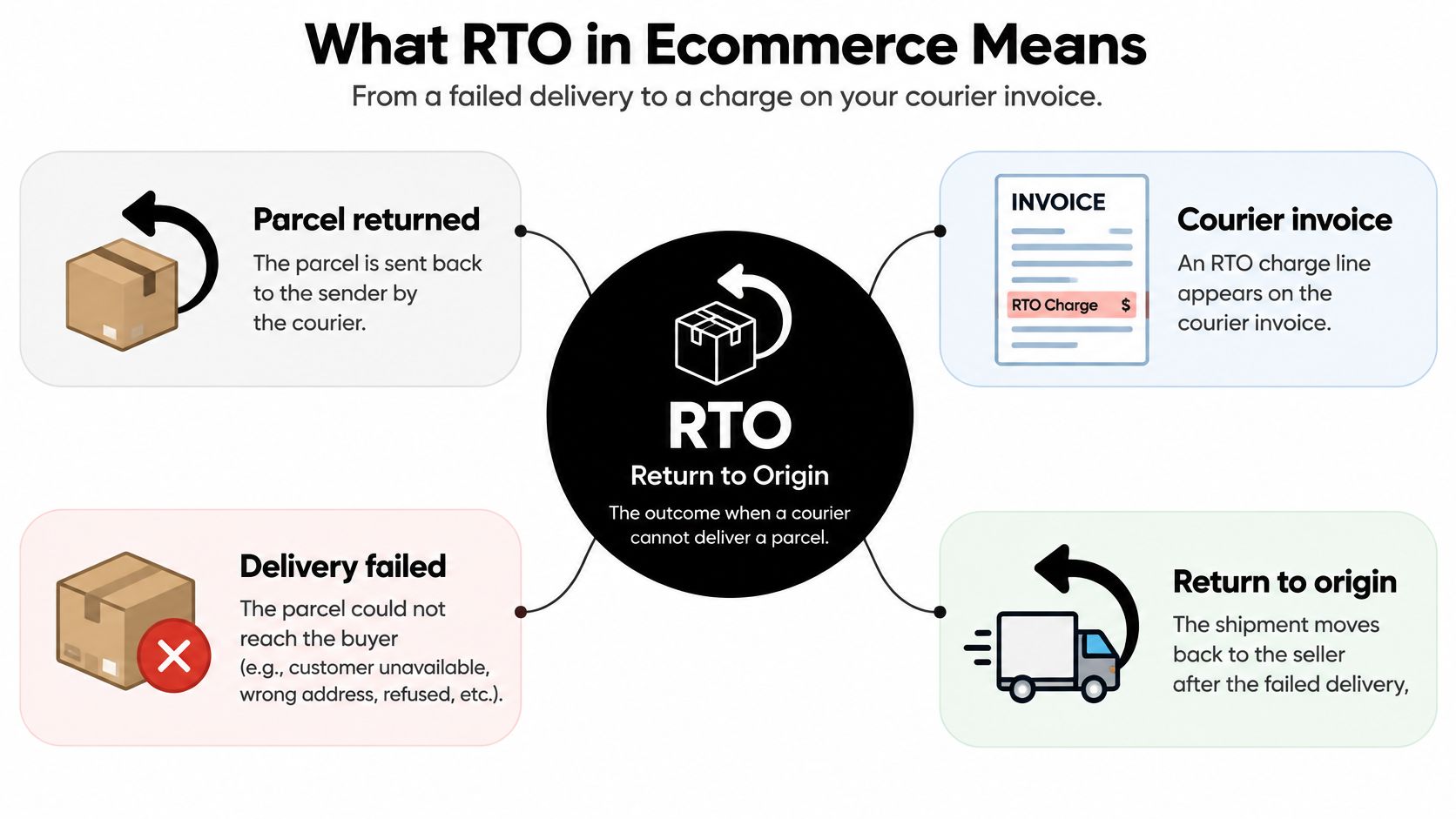
RTO charges in ecommerce means the courier's fee for carrying that undelivered parcel back to you. It gets billed on top of the forward shipping charge.
Treat the courier outcome separately from Shopify status
Shopify does not reconcile a courier return on its own. Depending on your fulfilment workflow, a dispatched COD order keeps showing Payment pending and Fulfilled even after the courier has started moving it back. Wait for the parcel to arrive, inspect the goods, then reconcile the cancellation and inventory. Restocking on tracking data alone puts units you have not inspected back on sale. For the step-by-step process, see how to reduce RTO.
Practical rule: An NDR belongs in a recovery queue. A received RTO belongs in a reconciliation queue.
Keep this separate from post-delivery returns. The National Retail Federation's merchandise-return report covers merchandise that buyers received and then sent back, a different pipeline from a COD parcel that never arrived. Combining both outcomes hides which process needs fixing.
What One RTO Actually Costs
Example only, replace these rupee figures with your courier's rate card. The amounts below are hypothetical budgeting inputs, not market rates.
| Cost line | Example amount | Notes |
|---|---|---|
| Forward shipping | ₹280 | Paid on dispatch, whether or not the parcel arrives |
| Return (RTO) shipping | ₹255 | Courier bills the trip back to your pickup address |
| Packaging and label | ₹25 | Box, tape, label and handling for the parcel |
| COD handling fee | ₹40 | Ask whether the courier refunds this on an RTO |
| Stock blocked in transit | No rupee value | Assume 10 to 14 days in this example |
| Staff time | No rupee value | Receiving, inspecting, restocking and updating the order |
Those example cash expenses total ₹600 before staff time. If a successfully delivered order leaves ₹300 in contribution margin, that single RTO wipes out the margin from two delivered orders.
Count the expense, not the missing revenue
Forward shipping has already been consumed. Return shipping pays for a separate journey, and damaged packaging may not be reusable.
Check whether the COD handling fee applies to unsuccessful deliveries or gets credited later. Reconcile the invoice against the contract rather than assuming every billed line is correct.
Inventory creates another problem: you can't sell the same unit while it's traveling back. Once it arrives, someone must inspect the product before making it available again.
Don't count the full selling price as an RTO expense and then add lost margin again. Separate cash expenses, inventory availability, and the sale you didn't earn.
A reattempt may also have its own billing rules. Sendaparcel's explanation of how to avoid extra redelivery fees is useful context for questions to ask about unsuccessful delivery attempts, not a substitute for your courier agreement.
Keep acquisition spending visible too, but don't allocate the same expense twice. For a related method of separating transaction losses from operational overhead, see chargeback costs and early traffic control.
Why COD Orders Drive RTO
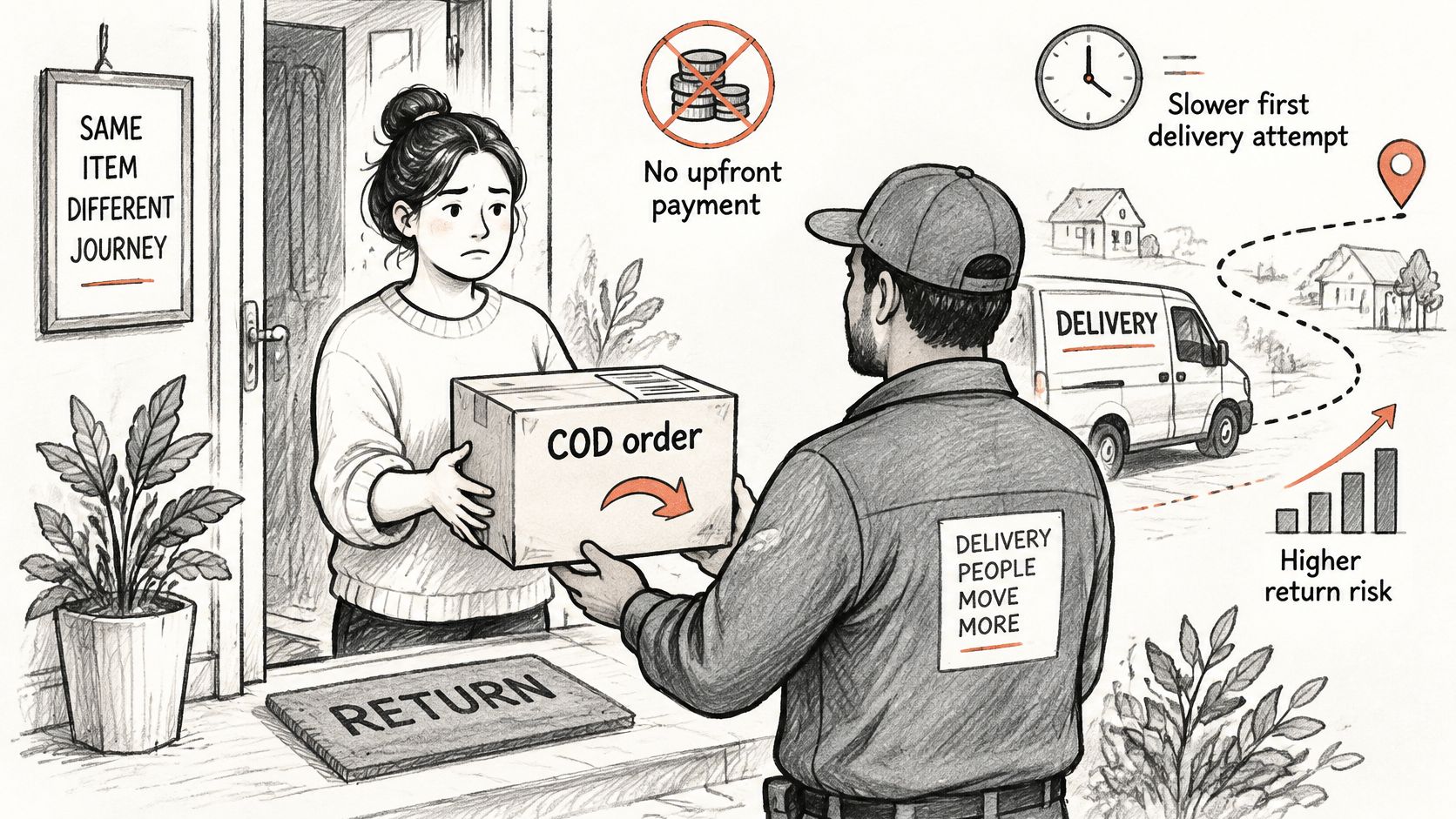
A COD buyer hasn't paid before dispatch, so refusing a parcel doesn't require recovering money already spent. Shipway's analysis reported by BW Disrupt found higher returns among non-prepaid shipments and an association between later first delivery attempts and more RTO.
That doesn't make every COD failure fraud. These are different problems with different fixes.
Separate intent from delivery problems
- Fake or prank orders: Someone supplies unusable contact details or an address where nobody intends to accept the parcel.
- Impulse orders: A genuine buyer changes their mind, forgets the purchase, or no longer wants it when delivery arrives.
- Wrong address or pin code: Missing apartment details or an incorrect pin code prevents successful routing.
- Buyer unreachable: The courier can't contact the person needed to receive or pay.
- Attempt failures: Closed premises, missed delivery windows, and unsuccessful rescheduling prevent handover.
For broader context, Comredix's latest ecommerce fraud figures can inform a fraud review, but they shouldn't be used to label every returned parcel fraudulent.
Diagnose before restricting COD
Start with cash on delivery on Shopify as a payment workflow, not a customer-risk label. Prepayment removes collection at the doorstep, but it doesn't remove address mistakes or delivery failures.
For your next weekly review, tag returned parcels fake, impulse, address, unreachable, or attempt. Fix the largest supported category first. Use “unknown” when the courier's explanation and the customer's account don't establish a cause.
RTO Causes, How to See Them in Shopify, and the Fix
Each returned parcel gets one primary cause, recorded against the order number. The table shows where each cause surfaces in Shopify records and which signal separates it from lookalikes. Some evidence lives outside Shopify: courier NDRs stay with the carrier, and visitor logs stay with the tool that captured the session.
| RTO cause | How to see it in Shopify | Signal that confirms the cause |
|---|---|---|
| Fake order | Mismatched contact details; sparse customer timeline; connected visitor log | No supplied channel reaches a real buyer |
| Impulse cancellation | Confirmation request sent, no reply | Buyer cancels or stays silent once reached |
| Wrong address or pin code | Courier NDR flags the delivery address | Pin code fails the courier's serviceability check |
| Buyer unreachable | Failed courier calls logged against the order | Shipping phone was never confirmed at checkout |
| Attempt failures | NDR reports closed premises or a missed window | Address passed serviceability; the delivery was attempted |
| Repeat offender | Customer, address, or device matches earlier RTO tags | Prior returns share the same contact or delivery details |
Once the cause is pinned, the fix follows from it. A failed serviceability check points at address capture. An unconfirmed phone points at confirmation. A clean address with repeated failed attempts points at dispatch timing and tracking communication. Applying one response to every returned parcel is how the wrong causes get treated.
Weight each signal separately
Shopify's order-protection documentation describes fraud indicators including address checks, payment checks, IP details, and unusual purchasing patterns. Those signals help on suspicious orders, but payment risk and delivery risk answer different questions: a low payment-risk classification says nothing about whether the courier services the pin code.
The same caution applies to confirmation. A buyer who ignores an SMS may have missed it, so allow a response window and keep a support route open before treating silence as a cause.
Make the records usable
Keep the order number, courier reason, customer response, and final outcome in one place. A visitor log lives in the tool that recorded the session, so copy the session reference or timestamp into the order's notes or timeline. That is what lets you join the visit back to the order when the parcel returns.
For reporting across many orders, how ELECTE integrates Shopify data shows how store records can be combined for analysis. Establish a consistent risky-order review process before automating restrictions, and remember that a customer tag records history rather than enforcing anything at checkout.
The Four COD Levers, in Order
Start with buyer confirmation, then address quality, selective COD limits, and prepaid incentives. Phone confirmation cannot repair a wrong pin code, and a prepaid discount can't fix a courier's missed attempt.
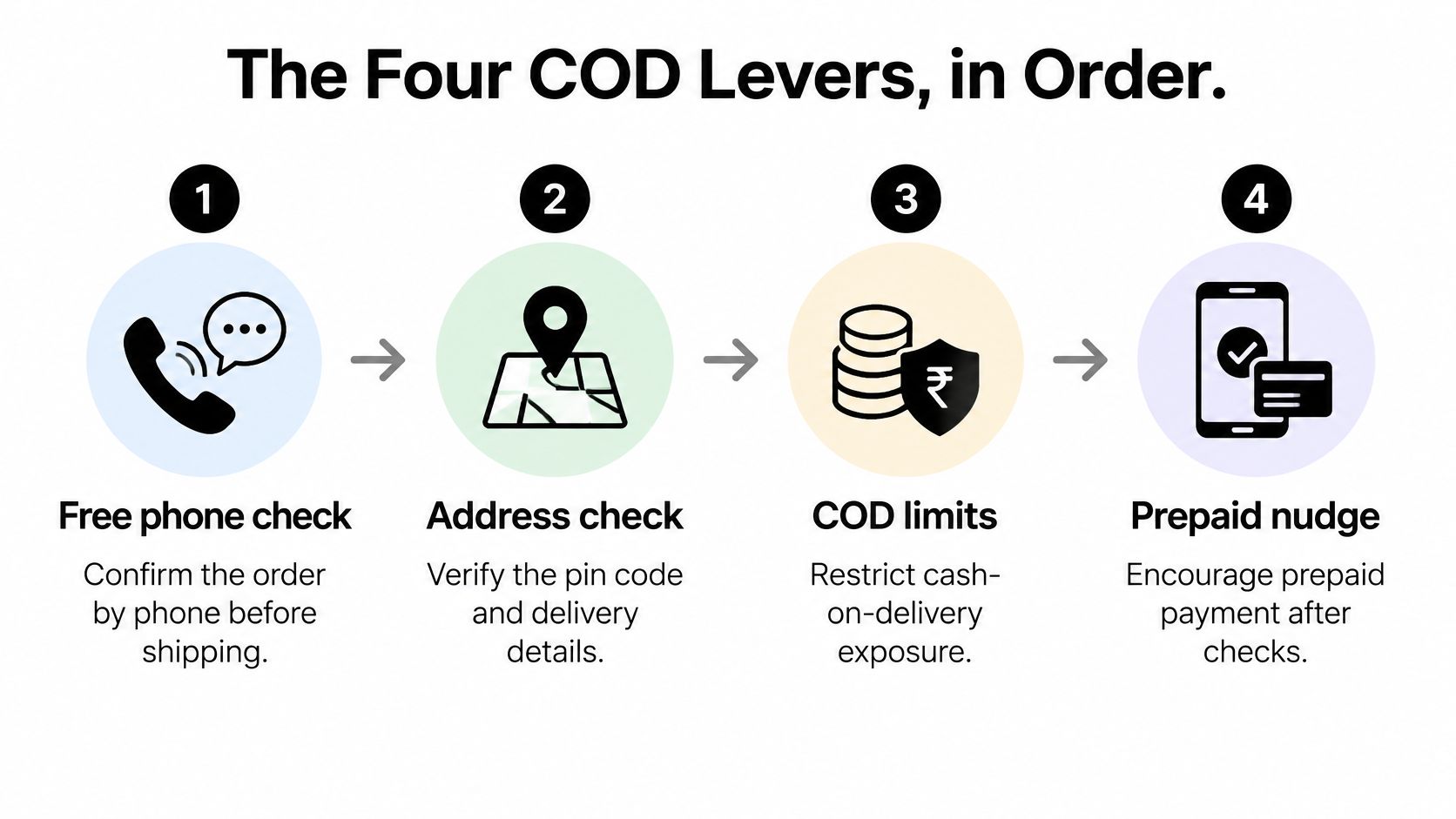
1. Confirm the order by phone before shipping
Use a free SMS-code confirmation workflow to establish that the buyer controls the supplied phone and intends to proceed. Require a shipping phone number in checkout, and keep unconfirmed orders outside the warehouse's dispatch queue.
A fulfillment hold is safer than a tag if staff might overlook tags. Reserve manual calls for exceptions rather than calling every confirmed buyer.
For cancellation automation, define the grace period and exclusions explicitly. Shopify Flow's Order risk analyzed trigger supports fraud-based workflows, but that trigger isn't itself proof of phone confirmation. Your workflow must use the correct confirmation signal.
The distinction matters when deciding how to stop fake orders on Shopify: confirming phone access adds evidence, not a delivery guarantee.
2. Clean the address and pin code
Require enough detail for an actual handover: building, unit, street or locality, pin code, and reachable phone. Use address autocomplete where available, but review contradictory details rather than accepting the suggestion blindly.
Check pin-code serviceability against the courier's current list before dispatch. A recognizable address and a serviceable destination are different checks.
3. Limit COD by cart value or region
Use your own completed delivery history to identify where COD exposure is uneconomic. Consider cart value, repeated refusal history, and destination rather than banning all first-time customers.
Shipping zones control where you ship, not merely where COD appears. Use supported payment-customization controls when you want prepaid shipping to remain available while restricting COD. Test the actual checkout before relying on a rule.
4. Nudge buyers toward prepaid
Offer an incentive only when the retained margin justifies it. A manual code is simple, but buyers may share it or use it without selecting the intended payment method.
If you need payment-specific eligibility, use a checkout-compatible implementation that enforces that condition. Compare delivered contribution margin, not just prepaid share. A higher prepaid share isn't a win if the discount costs more than the failed deliveries it avoids.
Where Securify and OTP+ fit
Map the tools to the order state, not the other way round. Securify on the Shopify App Store works at the storefront traffic layer, before checkout or payment tools see the visitor. The listing shows one Free plan, rated 4.6 from 103 reviews, with country and IP blocking, AI bot blocking, high-risk order alerts and risky-email blocking at checkout.
OTP+ on the Shopify App Store sits later, after the COD order exists. It confirms the buyer can use the phone number they gave, then your workflow decides the next state: hold, review, release, or cancel through Shopify Flow. The setup details and the free cancellation template are in the COD order verification guide; the paid branding tier is separate from COD verification.
Keep the sequence strict. Filter junk sessions before they become orders, confirm COD intent before dispatch, and still check pin-code serviceability before label creation. A confirmed phone cannot rescue a wrong pin code, and neither tool delivers the parcel.
Frequently Asked Questions About RTO in Ecommerce
Who pays RTO charges in ecommerce?
The courier bills the seller under the shipping agreement. Check forward freight, return freight, COD handling and any fuel or remote-area surcharge as separate invoice lines, then match credits against the original shipment before closing the order.
What if the courier charges a COD fee on an RTO?
Dispute it against the rate card and the COD remittance record. If the fee applies only when cash is collected or delivery is completed, ask for a credit and keep the RTO reason code with the invoice so the next bill is easier to audit.
When should I cancel, refund, or restock after RTO starts?
Work from courier state, not frustration. Keep the order open while the parcel is moving back, record the RTO tag and reason, and restock only after the return arrives and passes inspection. Refund or write off after the outcome is clear.
Can confirmation calls fix a wrong pin code?
No. Calls and SMS checks filter weak intent, but an undeliverable address stays undeliverable. Confirm serviceability and address quality before dispatch; use contact confirmation for intent while coverage checks remain separate.
How do I see RTO in Shopify?
Use a consistent order tag, such as rto-address, and filter Orders by that tag during your weekly review. Record courier outcome separately from payment and fulfillment status, then reconcile inventory only after receiving and inspecting the parcel.