
· customer risk assessment · shopify fraud · risk scoring · chargeback prevention · fraud analysis
Customer Risk Assessment for Shopify Merchants
Learn how customer risk assessment works for Shopify stores: scoring models, key data signals, and how to operationalize it to cut fraud and chargebacks.

You've got the classic Shopify risk pileup, a good order that doesn't look clean, a bad order that doesn't look obviously bad, and a queue that still needs a decision before the customer notices anything. Customer risk assessment is the discipline that turns that mess into a repeatable call. It asks three questions on every order or session, who is this, what are they doing, and what control should fire next.
In regulated finance, that idea became formal and risk-based in the 2000s. FATF's guidance made the core logic clear, identify the customer, identify beneficial owners, understand purpose and expected activity, and keep monitoring over time. That same thinking fits ecommerce well because a storefront isn't static. A returning buyer can become risky when the device changes, the geography shifts, or the payment behavior stops matching the customer's normal pattern.
For a Shopify store, customer risk assessment should drive allow, step up, or block. Anything else turns into guesswork. Shopify's own fraud guidance frames the order-level view clearly, and it's worth checking against your own workflow in the Shopify fraud-analysis primer. If you also want a broader customer-data lens, The AI CMO's customer intelligence guide is a useful complement, because the best risk programs don't look at one signal in isolation.
Table of Contents
- What Customer Risk Assessment Actually Means for a Store
- The Three Layers Every Risk Score Sits On
- How Risk Scoring Models Work in Practice
- Where Shopify Pulls the Signals From
- Comparing Shopify Fraud Analysis, Shopify Flow, and a Pre-Checkout Filter
- Turning a Score Into an Action
- The False-Decline Trap Most Risk Guides Skip
- Where Securify Fits
What Customer Risk Assessment Actually Means for a Store
A high-value order lands in the queue. Two cards have already been tried. The billing city doesn't match the shipping pattern you usually see. The IP looks masked. That's the moment most merchants realize they don't need a bigger fraud label, they need a better decision system.
Risk assessment is a control system, not a score
A customer risk assessment is the structured process of judging who is on the other side of an order, what they're trying to do, and how much friction the store should apply. FATF's customer due-diligence framework laid the foundation for that style of thinking, and later guidance made the risk-based approach mandatory, which pushed institutions away from identical treatment and toward proportional controls. In ecommerce terms, that means low-friction checks for low-risk activity, extra verification for higher-risk behavior, and harder stops when the loss potential crosses the line. The point is not to reject more orders. The point is to match control strength to actual risk.
A store that treats every checkout the same wastes time on safe buyers and under-protects the risky ones. A store that blocks on one noisy signal also burns good customers. The better approach is to ask what the order is telling you, then decide whether to proceed, verify, or stop.
Practical rule: if you can't explain why an order was held in one sentence, your risk logic is probably too broad.
The operational test is simple. If the customer is probably real and the order looks normal, allow it. If the signal set is mixed, step up verification. If the risk is concentrated and the downside is clear, block or cancel.
The Three Layers Every Risk Score Sits On
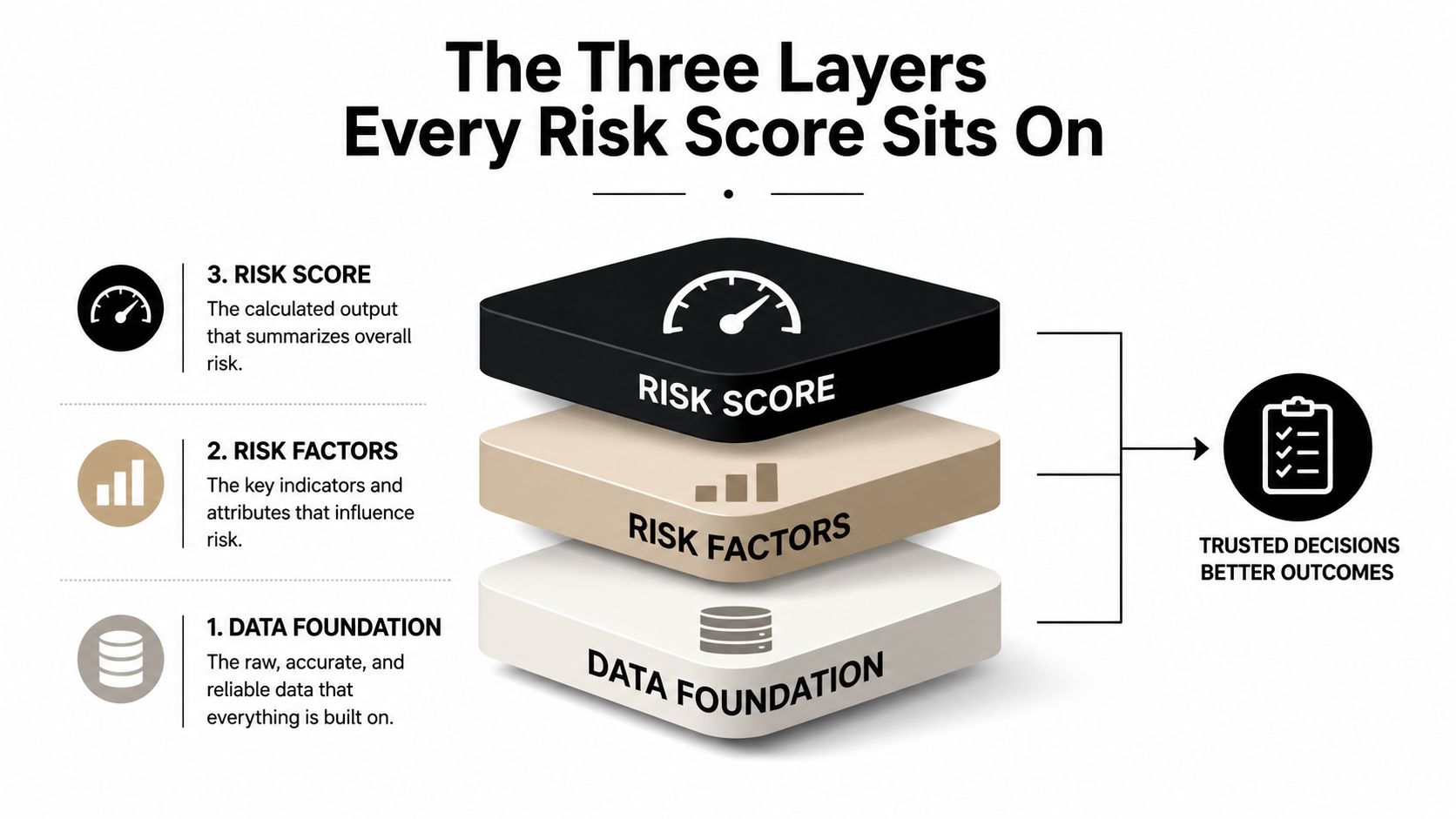
A decent score starts with three separate layers. If you blur them together, you lose the failure mode that matters.
Identity, behavior, and transaction risk are different problems
Identity risk is about who the customer says they are and whether the proof holds. A new shopper with a fresh email and no history is a different case from a returning buyer with an established profile. NIST separates this kind of problem from authentication and federation because each one fails differently and needs a different control.
Behavioral risk is what the visitor is doing on the site. Repeated checkout attempts, strange browsing velocity, and traffic that looks automated all belong here. These signals matter because they often show intent before payment data does.
Transactional risk is the payment side, card checks, AVS, CVV, funding source, and whether the payment details fit the order context. That's where a customer can look legitimate on the surface and still trigger concern.
A Shopify merchant should think in layers. A brand-new customer placing a high-AOV order from a new device is not the same as a repeat buyer with a billing change. A single bad signal can be noise. Agreement across layers is what raises confidence.
A score is strongest when identity, behavior, and payment all point in the same direction.
For a practical lens on triaging outreach from scored records, the piece on how to prioritize outreach with risk scores gives a useful mental model. The key lesson carries over here, use the score to decide which orders deserve attention first, not to flatten every case into the same bucket.
How Risk Scoring Models Work in Practice
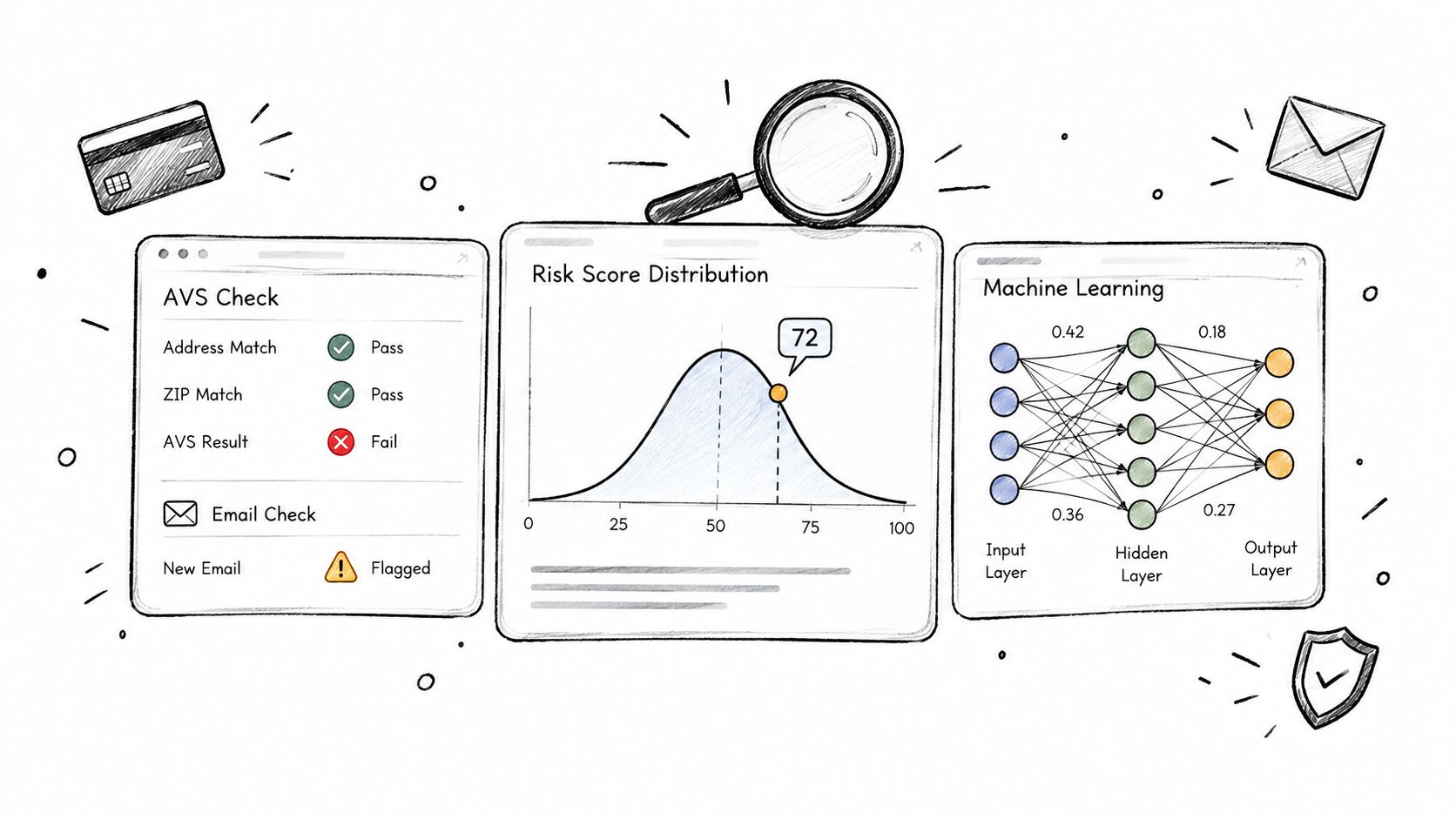
Walk through enough Shopify fraud queues and you'll see the same three setups: rules, statistical scoring, or a hybrid of both.
Rules are clear, models are flexible, hybrids are usually the end state
A rules-based system is the easiest to read. If AVS fails and the email is new, send it to review. If the billing country and shipping country don't match and the order is unusually large, hold it. Rules are fast to tune and easy to defend. They also age badly when fraud shifts or when a rule starts catching too many good buyers.
A statistical model learns weights from past outcomes. Instead of one hard trigger, it estimates risk from the full mix of signals. That catches patterns humans miss. It also depends on clean data, drift checks, and someone who knows when a score has gone stale.
A hybrid model is where mature ops teams usually settle. Rules handle the obvious cases and keep the logic visible. The learned score smooths out edge cases and catches newer behavior. That setup also fits proportional review. Stronger scrutiny goes to the orders that earn it, lighter treatment goes to the rest.
A practical banding scheme often looks like 1 to 10. Low risk sits near the bottom, medium risk sits in the middle, and high risk sits near the top. The scale matters because it maps to action, not because the number itself has magic. A score only earns its keep if it changes what the team does.
Where Shopify Pulls the Signals From
Shopify merchants usually see the strongest signals at the order level first. That's where the decision pressure is, and that's where the platform gives you the most usable detail.
Start with the order record, then add session context
Shopify's fraud analysis can surface whether AVS passed, whether the CVV matched, whether the IP details look unusual, and whether the order shows odd purchase patterns. It can also flag orders as low, medium, or high risk, with colored indicators attached to the record. That's useful because the merchant can review the actual evidence instead of treating one label as the whole story. Shopify's fraud help also notes that the available indicators can vary by order, so a missing signal doesn't prove the order is safe.
The next layer is session behavior. Repeated visits from the same fingerprint, very fast checkout attempts, and bot-like browsing matter because they often show automation before payment risk shows up. Device, velocity, and traffic quality become useful here.
Enrichment comes last. Email age, phone type, and BIN country can help, but only if you know what they're telling you. A traveler on a VPN is not the same as an abusive session. A customer using a corporate card with a billing address in another state is not automatically fraud either.
For a deeper look at traffic quality signals, the article on bots and proxies is a practical companion. It's the kind of evidence that helps you separate suspicious infrastructure from a legitimate shopper who just happens to look odd on one field.
Use this order of operations:
- Order signals first: AVS, CVV, and the platform's risk indicators.
- Session signals next: velocity, repeat visits, and unusual device behavior.
- Enrichment last: email, phone, and BIN checks.
Comparing Shopify Fraud Analysis, Shopify Flow, and a Pre-Checkout Filter
A Shopify store usually needs more than one control layer. The mistake is using the wrong one for the wrong job.
The cleanest stack separates traffic control from order review
| Layer | Evaluates | When it runs | Output | Cannot catch |
|---|---|---|---|---|
| Shopify fraud analysis | Order-level payment and risk signals | After authorization and order creation | Low, medium, or high risk indicators | Bad traffic that never should've reached checkout |
| Shopify Flow automations | Existing order risk signals | After fraud analysis completes, using the risk-analyzed trigger | Tags, holds, alerts, routing | Sessions that were blocked earlier or never converted |
| Pre-checkout traffic filter | Session-level traffic quality | Before checkout | Blocked or allowed visitor sessions | Payment-level fraud that only appears at checkout |
The big win here is timing. If the traffic is obviously abusive, stop it before it becomes an order. If the order exists, use the platform's signals and your workflow to decide what happens next.
Shopify's Flow guidance is explicit about using Order risk analyzed, not Order created, because fraud analysis finishes after the order is placed. That detail matters more than teams often expect. A workflow that starts too early can make the right decision on an incomplete record.
For a support-side view of how risky orders show up in tickets, AI customer support for Shopify is a useful reference point. The operational lesson is the same across support and fraud, don't let a noisy session become a messy ticket if you can stop it earlier.
Turning a Score Into an Action
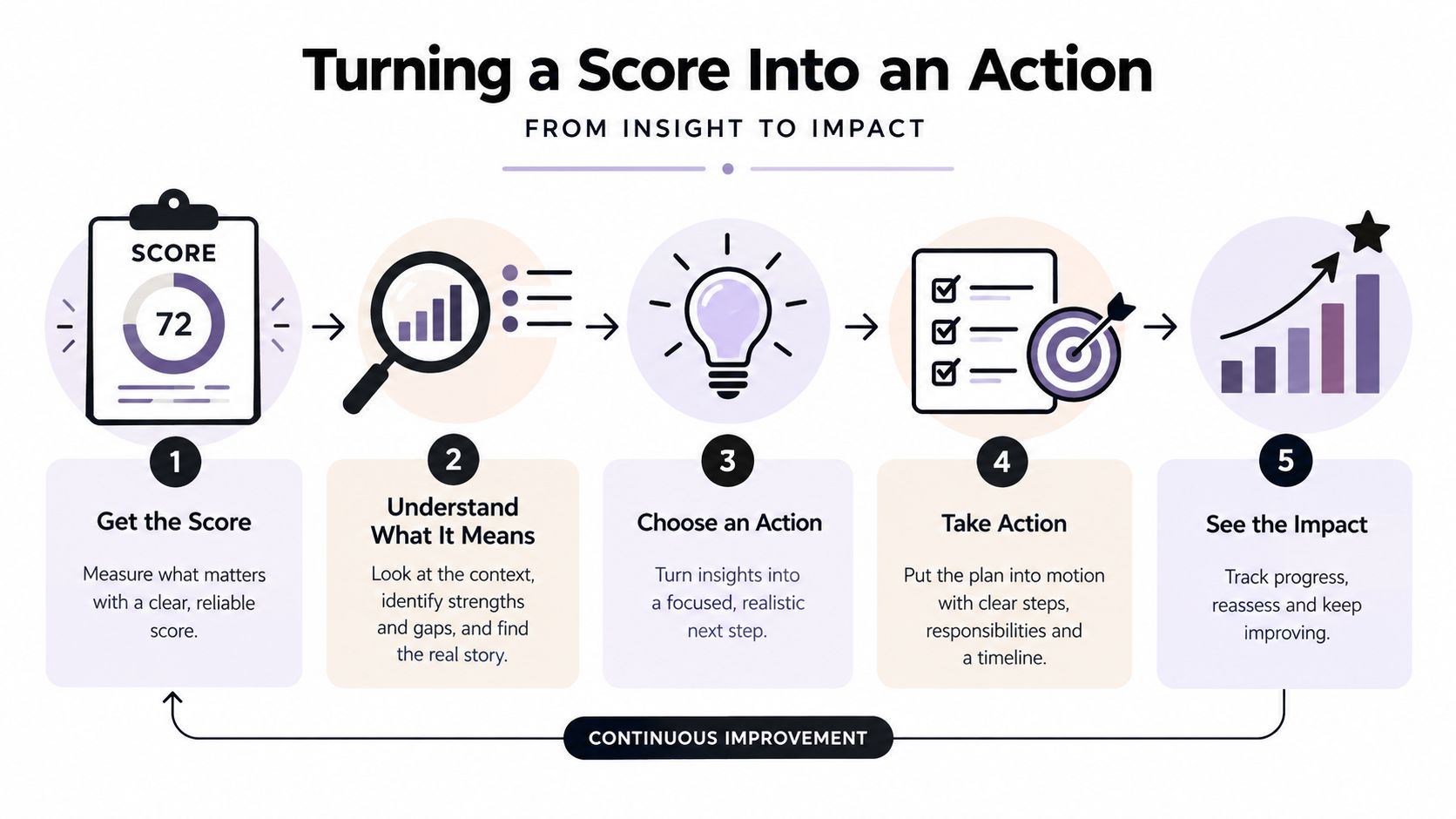
A score that doesn't change operations is decoration. The value is in what the score triggers.
Match the band to the action
Low-risk orders should move through with minimal friction. Medium-risk orders should trigger step-up verification, things like address confirmation, email confirmation, or stronger payment authentication. High-risk orders belong in manual review or hold status. Very-high-risk orders should be canceled and refunded when the evidence is strong enough.
The hard part is not naming the bands. It's keeping the queue manageable. If every borderline case lands in manual review, the team burns out and starts rubber-stamping. If the queue is too small, you miss the patterns that need human judgment. Review should be reserved for cases where the available signals conflict or where the financial impact is large enough to justify a second look.
Operational rule: write the reviewer checklist so two people looking at the same order reach the same answer for the same reason.
The easiest checklist starts with the same sequence every time. Check identity fit, then transaction fit, then session fit. Record the reason for the decision, not just the decision itself. That gives you something you can audit later when a chargeback hits or a customer complains.
Use Shopify's fraud reports separately. Acceptance rate, high-risk order rate, fraudulent chargeback rate, canceled due to fraud, and the broader chargeback report answer different questions. If you treat them as one metric, you'll misread what changed.
For a tighter operational playbook on queued risky orders, the guide on Shopify high-risk orders is the right next stop.
The False-Decline Trap Most Risk Guides Skip
A stricter rule set does not always improve the business. It can shift the loss somewhere else.
Good customers can look risky for boring reasons
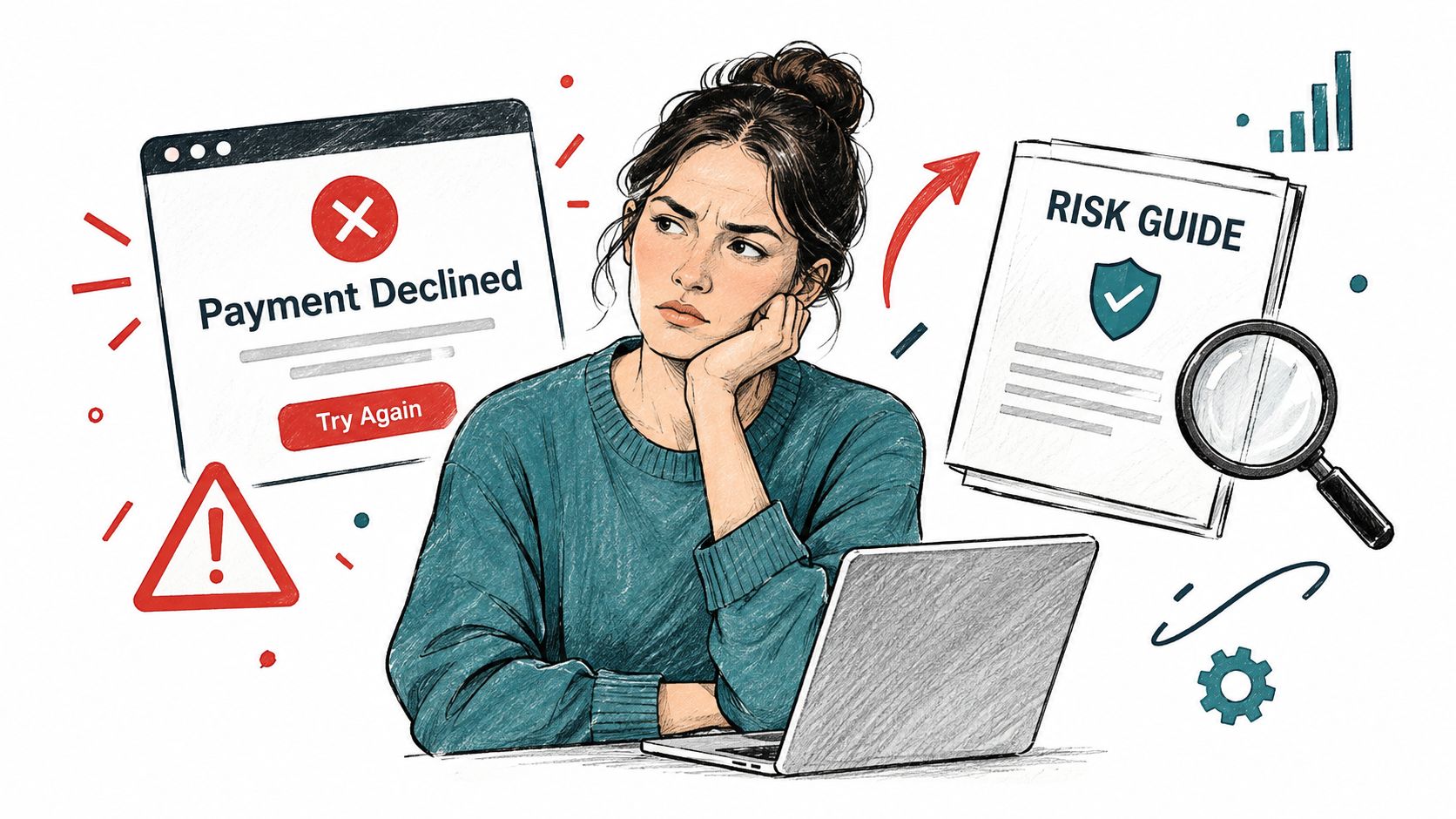
Merchant research shows how common this problem is. One survey on merchant trade-offs found that 85% of respondents struggle to reduce friction for legitimate customers without increasing fraud, and 47% estimate that as many as 5% of legitimate orders are falsely declined. A 2025 consumer study on ecommerce rejection found that nearly 6% of orders are rejected because of suspected fraud, and up to 80% of those rejections involve legitimate customers. The exact figures matter less than the pattern. False declines are not a side issue. They are a direct revenue leak.
Blanket blocks are the fastest way to create that leak. Shared VPNs, mismatched billing countries, and prepaid cards can all push legitimate shoppers into a blocked state. Cross-border buyers and privacy-conscious customers feel that friction first. If the rule is too blunt, it catches bad actors and good buyers in the same net.
The right test is blunt too. Pull a sample of held or canceled orders. Read them like a customer, not like a fraud analyst. Ask whether the order would have converted cleanly if the same shopper had used a different network or payment method. Then ask what that lost customer could have been worth over time. That is the part many teams skip.
Logging is what keeps the program honest
Every decision should leave a trail. Store the order, the score, the signals that pushed it up or down, the action taken, and the eventual outcome. That gives you a clean record when you review false positives and false negatives later.
When fraud changes shape, the model has to move too. New BIN countries, new device patterns, and seasonal spikes can make yesterday's rule set look dated. A weekly queue review, a monthly threshold review, and a quarterly model review are enough for most stores to stay current without over-tuning.
For a closer look at the order-level signals and the risk-analysis workflow itself, Shopify fraud analysis lays out the frame. Keep the decision calibrated to order margin, customer value, and the actual loss pattern you are seeing.
Where Securify Fits
Securify fits in the pre-checkout layer. It filters bot, VPN, proxy, and out-of-region traffic before those sessions reach the storefront, which helps keep noisy visits from distorting the signals that Shopify fraud analysis later uses on actual orders. That matters when you're trying to separate real shoppers from traffic that only looks real for a few seconds. If you want to see the product directly, the Shopify App Store listing is here, Securify on the Shopify App Store.
What is the practical cadence for reassessing a returning buyer? Reassess whenever the risk profile changes, and otherwise use a regular review cadence tied to your order volume. A good operating habit is to re-check after a device change, a payment change, a geography change, or any unusual transaction pattern. If nothing changes, a routine review on a set schedule is enough.
Does Shopify's built-in fraud analysis cover most small stores? It covers a lot of the core order-level work, especially AVS, CVV, IP details, and unusual purchase patterns. The gap is traffic that should never have become an order in the first place, plus the manual judgment needed when signals conflict.
What's the difference between AVS and CVV? AVS checks whether the billing address matches what the card issuer expects. CVV checks whether the customer entered the card security code correctly. AVS is about address fit, CVV is about card possession.
When should a merchant cancel a high-risk order instead of holding fulfillment? Cancel when the evidence lines up across identity, behavior, and payment and the risk is too strong to justify more friction. If the order is merely suspicious, hold it and route it through review. Shopify Flow should use the Order risk analyzed trigger so the workflow waits for the completed fraud analysis before acting.
Securify helps you block the traffic that makes risk review noisy in the first place. It's useful when bot sessions, VPN abuse, and out-of-region visitors are polluting the top of the funnel and making real order signals harder to trust. If that's the problem you're dealing with, visit Securify and see how the platform fits around your existing Shopify risk workflow.