
Wardrobing: What It Is and How to Stop Wear-and-Return
Wardrobing is buying an item to wear once and return it as new. How fashion, jewelry and beauty stores on Shopify spot it, set policy and stop repeaters.
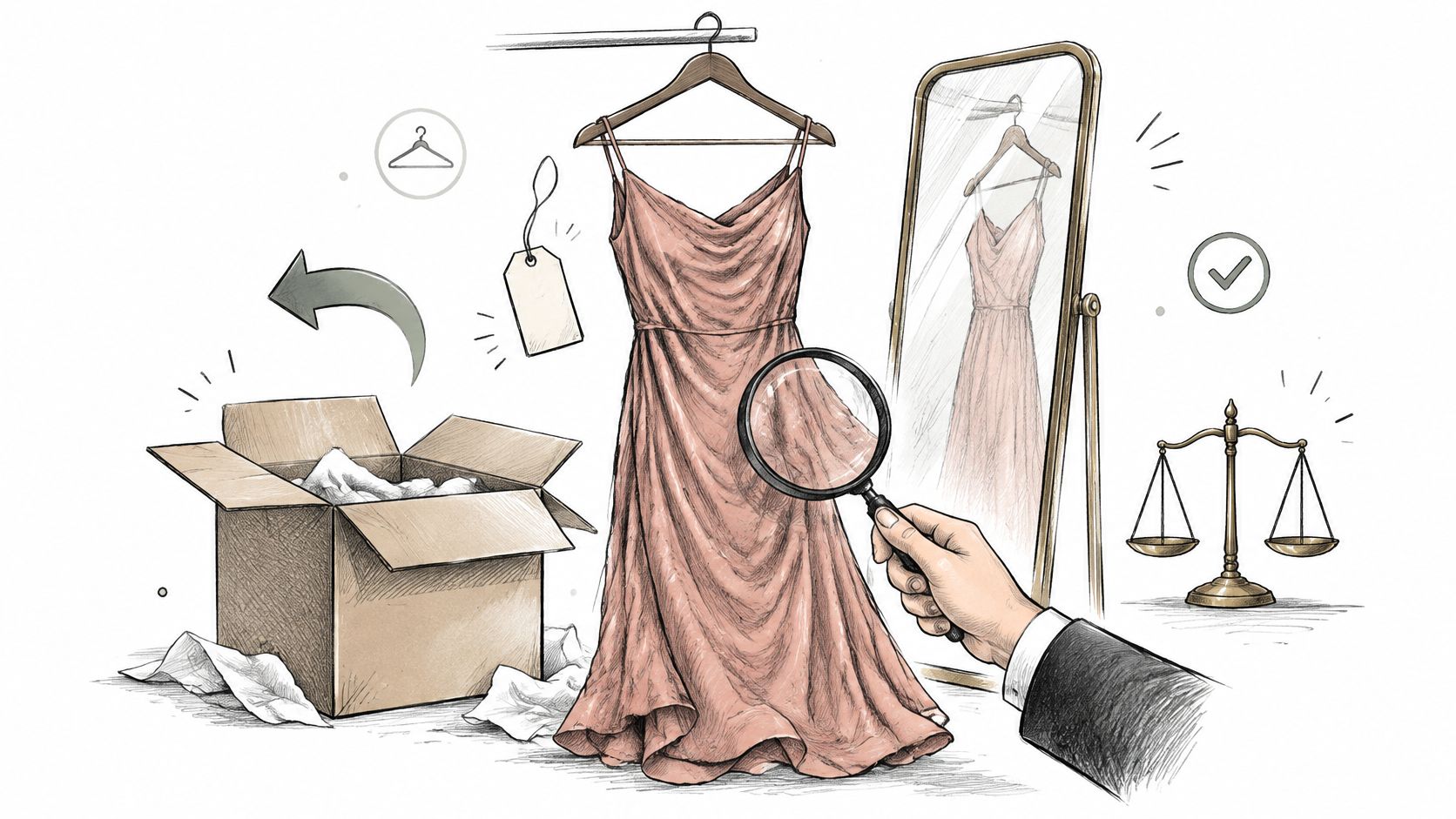
Wardrobing is buying an item to use once and returning it as unworn for a full refund, which makes it return fraud. It affects occasion wear, shoes, swimwear, event jewelry, and beauty products tried once.
But does a missing tag prove that a shopper wore the item? No. For a Shopify merchant, the useful distinction is between an ambiguous return and documented repeat behavior. One worn return is a judgment call; a pattern is a policy problem. Your response should rest on inspection, records, and terms the customer could read before purchasing.
Table of Contents
- What Wardrobing Means, and What It Is Not
- How to Spot Wardrobing Fraud in Your Returns
- Policy and Product Levers to Set in Shopify
- What US Return Rules Require You to Disclose
- The Repeat Offender Playbook
- Where Securify Fits
- Frequently Asked Questions About Wardrobing
What Wardrobing Means, and What It Is Not
Wardrobing means misrepresenting a used item as unused. In practice, that means buying an item, wearing it, and sending it back for a refund. The fraud sits in that misrepresentation: you may recover the merchandise without recovering something you can sell as new.
The cost isn't just the refund. Your team inspects the item, assesses cleaning or repackaging, and decides whether to discount it, route it to a used-inventory channel, or pull it from sale. Each of those outcomes is worse than a straightforward resale.
Separate use from fit uncertainty
The line is use.
An unworn item that didn't fit, an unwanted gift, an order bracketed across several sizes with the extras sent back untouched: returns like these come back in sellable condition under your policy, so they stay inside normal returns handling. When fit questions keep generating returns, Robosize's guide to fashion sizing is a useful reference for tightening how you present measurements.
Inspection test: Was the item used, and is the customer presenting it as unused?
Timing adds context to that test. A CNBC report published in August 2024 covered an Optoro survey in which 30% of shoppers said they had bought an item for a specific event and returned it afterward. Those are self-reported answers about shopper behavior, so treat the figure as a backdrop and weigh your own inspection records instead.
A high personal return rate works the same way. It's a reason to pull the order history, check earlier inspection notes, and look for repetition before you act.
How to Spot Wardrobing Fraud in Your Returns
No single sign establishes intent. A detached tag or an order placed before a holiday needs context. Even visible wear doesn't tell you whether an item arrived damaged, was tried on reasonably, or was used beyond your policy.
Use this table to separate observable condition from assumptions about the customer. Any refusal, deduction, or store-credit offer must follow your disclosed policy and applicable rules.
| Sign | Innocent explanation | Abuse pattern | What to do |
|---|---|---|---|
| Tags detached or reattached | Removed to try on | Different fastener; hygiene strip missing | Photograph at receipt; apply the tags-attached rule; partial refund only where permitted |
| Deodorant, perfume, or scuffed soles | Tried on at home | Clear wear with a change-of-mind reason | Inspect first; decline under the policy or route to used inventory |
| Ordered before an event, returned after | Gift didn't fit | Recurring event-linked returns | Record dates; consider a shorter disclosed window for future occasion-wear orders |
| Several sizes or colors, all but one returned | Genuine fit uncertainty | Repeated bracketing with shipping costs | Improve fit information; consider disclosed return-shipping charges; review frequent-returner automation |
| Jewelry scratched or missing its pouch or certificate | Packaging misplaced | Custom, engraved, or resized pieces returned worn | Photograph condition; disclose custom-item exclusions before purchase |
| Beauty seal broken, product level down | Shade mismatch | Repeated reaction claims across products | Handle safety complaints separately; apply disclosed opened-product terms; improve shade tools |
For broader distinctions, use the guide to return fraud.
Before deciding, check:
- Return reason: Apparel reasons such as too big or too small point toward fit.
- Product reporting: Review returned quantities by product and variant for sizing problems.
- Customer history: Read return statuses and previous outcomes across orders.
Act on something you can photograph or document, not a hunch about someone's intentions.
Policy and Product Levers to Set in Shopify
Start in Settings > Policies and review the return rules available to your store. Separate the written customer promise from the settings that control self-serve requests. Self-serve settings cover only part of your returns; staff judgment covers the rest, including every return your team handles manually.
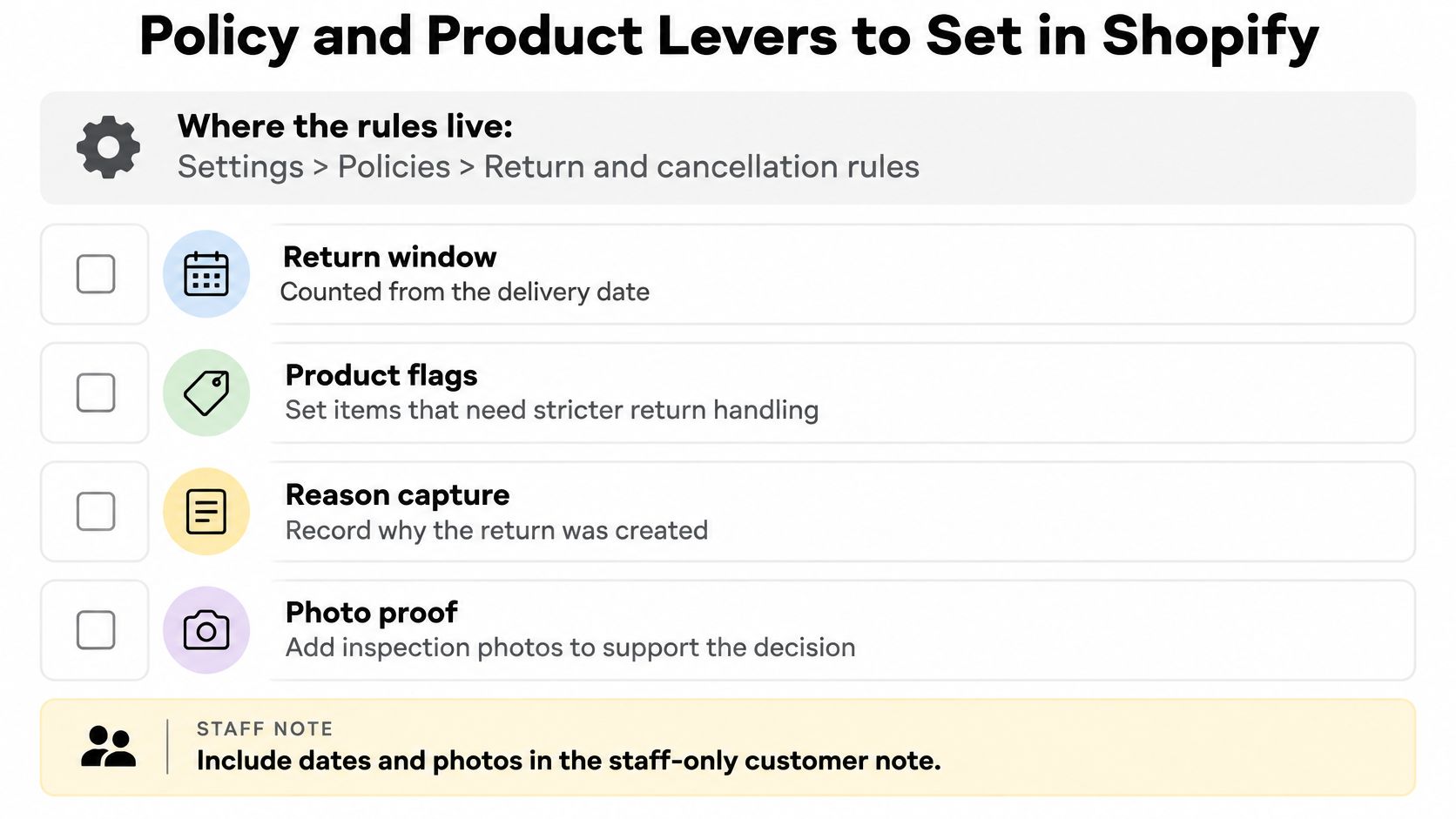
Write terms your team can enforce
Define when the return window starts and ends. If occasion wear needs a shorter window, disclose that distinction before purchase and make sure your operational setup supports it.
Identify final-sale products clearly. Custom jewelry, intimates, and opened beauty products need specific wording, not a blanket statement buried in a footer. Defect and safety complaints still need their own review, whatever the sale terms say.
Explain return shipping and any restocking fee in plain language. State the amount or calculation, when it applies, and any exceptions. Don't assume software automatically deducts a fee; check the refund calculation before submitting it.
Publish the policy where customers can find it before paying, including through checkout policy links. Then test the customer-facing return request yourself and compare it against what staff do. If the self-serve flow promises something your team can't honor, fix the flow before the first disputed return exposes the gap.
Inspect before sending money
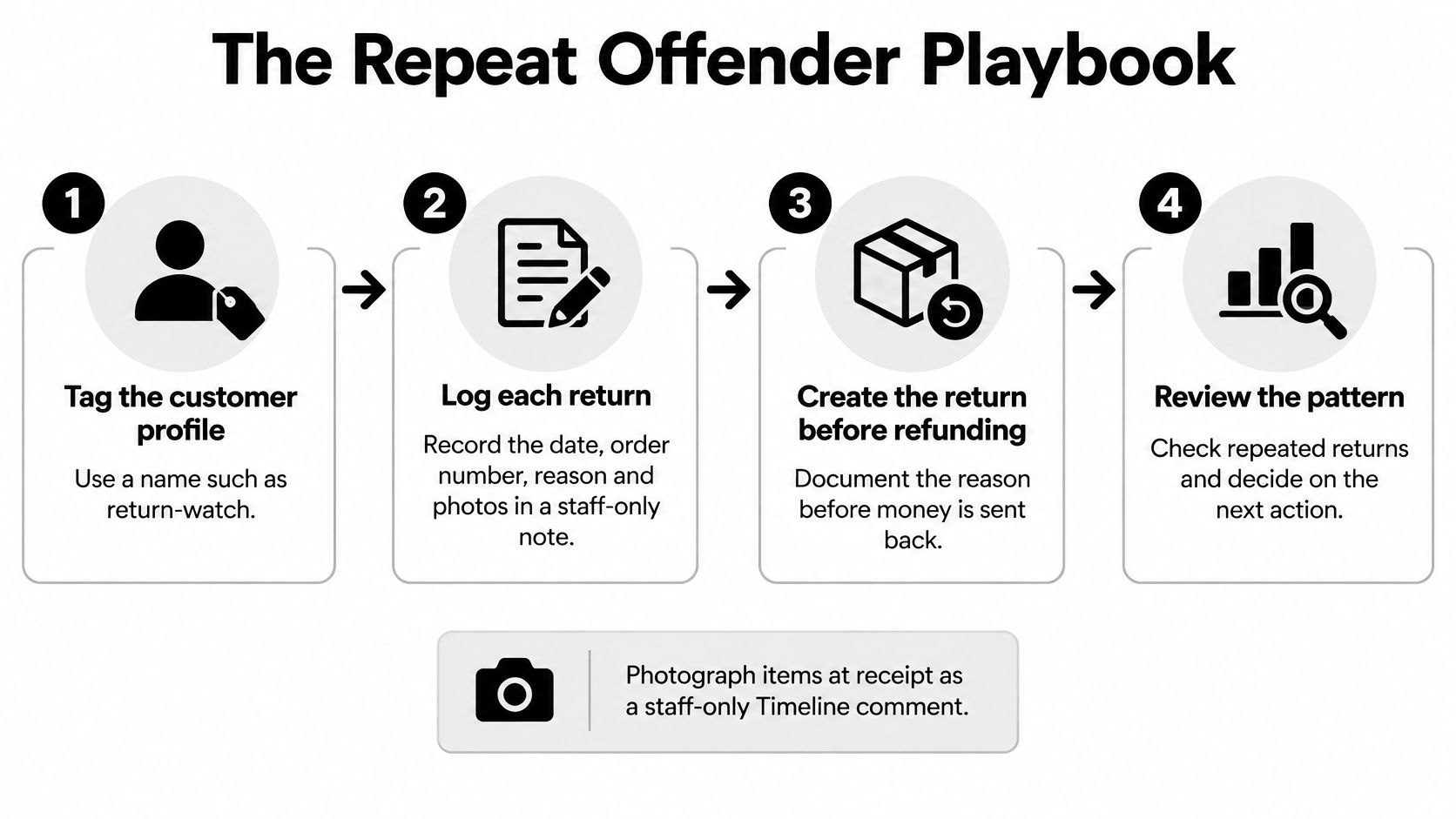
- Create the return record first. Capture the customer's reason before issuing the refund.
- Receive and inspect the merchandise before approving a condition-dependent refund. Keep refund processing pending while that review is open.
- Attach receipt photos to an internal record. Include the order, SKU, condition, inspection date, and decision. Keep internal comments separate from customer messages.
One worn return on an otherwise clean account is a judgment call: refund it as a courtesy or decline it under the disclosed condition terms, and write down which you chose. A second and third worn return on the same account stops being a judgment call. That is what your records and disclosed rules are for.
Product information is another control. Add garment measurements, style-specific fit notes, fabric stretch, lining details, and clear jewelry dimensions. For beauty, show shade comparisons and explain finish and coverage. Better fit information reduces bracketing and honest fit returns, which keeps condition reviews focused on genuine wardrobing.
Keep payment-risk review separate from return-condition review: an authorized purchase can still produce an abusive return. For the order side of the problem, see the guide to managing Shopify order risk.
A stricter policy won't fix a product page that leaves shoppers guessing about fit.
What US Return Rules Require You to Disclose
Set the return terms you intend to enforce, then mark the complaints those terms do not control. A broken clasp, failed seam, or skin reaction goes through defect, warranty, or safety intake. A change-of-mind return follows the posted condition rules.
For wardrobing, write objective requirements: unused, unworn, specified packaging present, and hygiene seals intact where appropriate. State the consequence plainly: when inspection finds wear, missing packaging, or a broken seal, the refund is reduced, rejected, or held for review under the posted terms. Keep one worn return as a judgment call in the inspection record; treat repeated condition failures across orders as a policy problem.
Before tightening fees or refund limits, map the states you sell into and flag rules that restrict restocking fees, refund methods, deadlines, or final-sale language for online orders. Where a rule limits the policy, change the policy text and refund settings to match, and train staff on which complaints bypass the condition checklist.
The Repeat Offender Playbook
One worn return is a judgment call. A repeat pattern is a policy problem, and patterns only become visible when you write things down. Build the record before restricting future purchases: a shared customer history keeps staff from contradictory decisions and unsupported accusations.
- Tag the profile. Use an internal label such as
return-watch, never an accusation in customer-facing messages. - Log every return. Record dates, order numbers, return reasons, inspection photos, and outcomes in staff-only records. A single entry means little; similar entries across several orders are a pattern you can act on.
- Review automation before enabling it. If you use a frequent-returner Shopify Flow template, inspect its trigger, eligibility conditions, and cancellation actions. Begin with manual review when the consequences are unclear.
- Confirm the rules fire. Review available return-abuse notifications and checkout rules, and test their matching behavior in your own store before relying on them.
- Assess the whole customer. Run a customer risk assessment before blocking, and weigh successful purchases and legitimate product complaints against the returns. A customer who buys often and returns occasionally is a different risk from one who orders, wears, and sends back repeatedly.
For high-priced pieces, OTP+ verification gates can add phone verification at checkout. Phone verification confirms the account holder controls a number. It does not show what happens to the merchandise after delivery.
An email-only restriction will not catch every returning shopper, since a new account with different details can sidestep it. Review the limits of blocking a customer on Shopify instead of assuming a profile tag prevents checkout.
Where Securify Fits
Securify works on the next purchase attempt. Garment inspection, refund decisions, and disputes stay with your team.
Securify on the Shopify App Store has a Free plan, rated 4.6 from 102 reviews. It includes unlimited high-risk order alerts that you can hold or cancel, and it blocks fake and risky emails and customers at checkout, so a known wardrober's next attempt stops before it becomes an order. In Gorgias, when an agent confirms the risk, clicking Apply High Risk Tag in the Securify widget writes the High Risk Customer tag to the Shopify profile in real time, without switching to Shopify Admin.
The controls work alongside Shopify Fraud Analysis. Your inspection photos and staff records remain the evidence behind each return-condition call.
The guide on how to block a customer on Shopify separates record-keeping from enforcement. For category specifics, see Securify for fashion stores and Securify for jewelry stores.
Frequently Asked Questions About Wardrobing
What do I do if a return arrives with a broken seal or missing tags?
Treat it as used until inspection proves otherwise. Photograph the packaging, seals, and tags before you handle the item further, then grade it against the condition terms in your policy. Refund based on what the photos show.
What if a customer disputes my inspection finding?
Send the dated intake photos and cite the condition standard the item failed. Keep the exchange on the order record and offer the outcome your policy allows. Documented evidence settles most disputes.
Can I refuse a return if the item has been worn?
If your published policy excludes worn items, decline the refund on that basis. Inspect and photograph first, then cite the exact policy term in your reply. A single borderline return is a judgment call; clear photos make refusal defensible.
Can I charge a restocking fee on Shopify?
If your policy discloses the fee, deduct it in the refund screen. Check the refund calculation before you submit, and show the customer the deducted amount.
How do I stop a customer who wardrobes repeatedly?
Treat the pattern as a policy problem. Pull the order history, attach the inspection photos, and apply the future-order restriction your policy names. Review each match before acting; a repeat buyer can order under different details.