
Chargeback Fraud Prevention Strategies
Master chargeback fraud prevention for your Shopify store. Learn how to stop friendly fraud, block bot traffic, and protect your revenue from costly disputes.
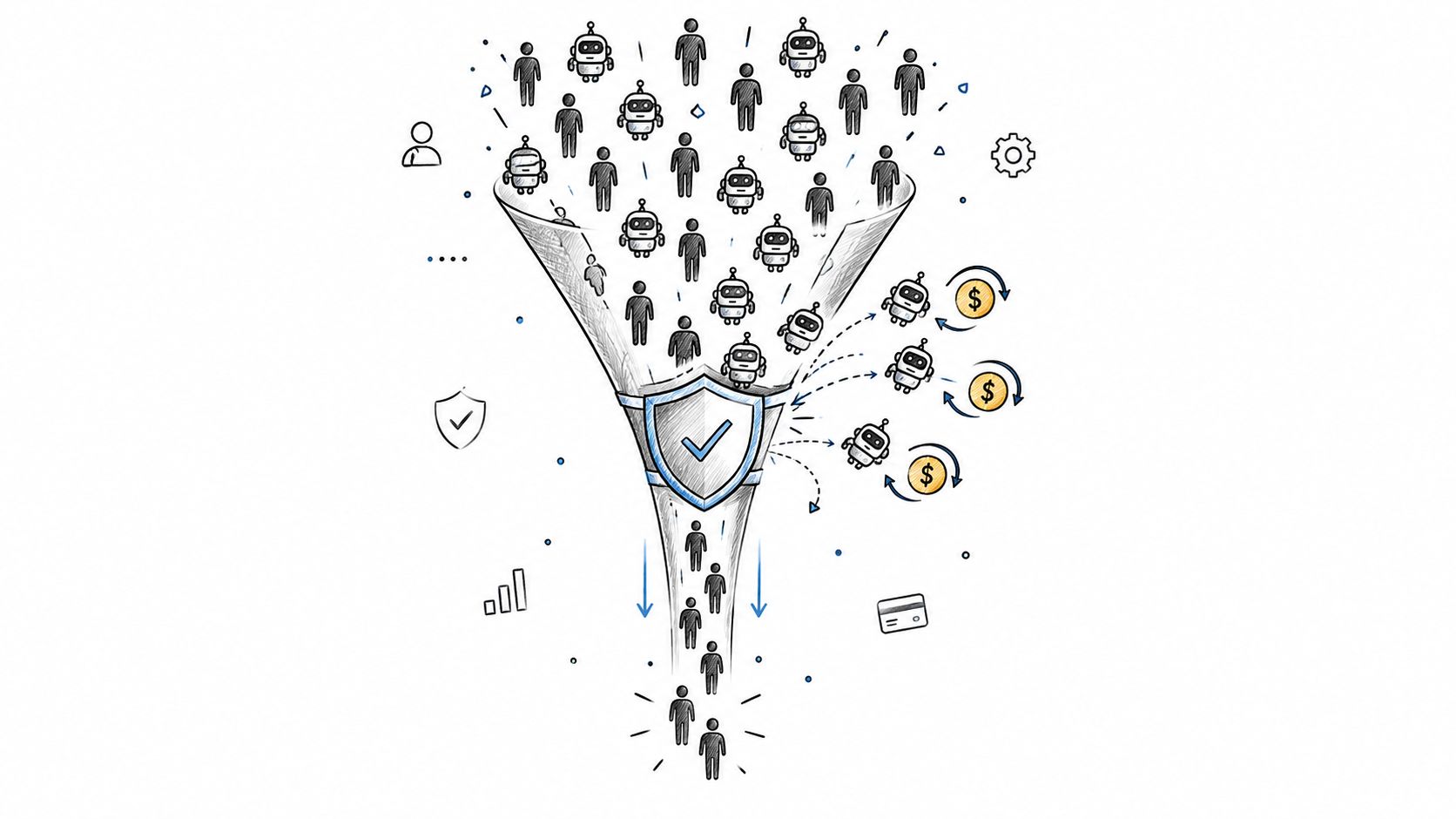
Most chargeback advice starts too late. It tells you to add CVV checks, turn on 3D Secure, and prepare stronger representment after the issuing bank has already opened a dispute. Those controls matter, but they don't explain why certain stores attract more abusive orders in the first place.
The more useful question is upstream: what kind of traffic is reaching your storefront, product pages, checkout, support desk, and email flows? Bot networks, masked sessions, card testers, and opportunistic buyers can distort the funnel long before a payment gateway labels an order risky. Effective chargeback fraud prevention therefore combines payment controls with traffic-quality controls, clear customer operations, and evidence that survives a dispute.
Table of Contents
- Rethinking the Root Cause of Disputes
- The True Cost of Chargebacks and Network Thresholds
- The Shift Toward Friendly Fraud and First-Party Abuse
- How Bot Traffic and VPNs Inflate Fraud Risk
- Implementing Upstream Controls and Verification Rules
- Protecting Post-Purchase Workflows and Support Queues
- Building a Sustainable Fraud Prevention Strategy
- Where Securify fits
Rethinking the Root Cause of Disputes
A chargeback appears in the payments layer, but its causes often begin much earlier. A suspicious session may scrape prices, test account creation, probe checkout behavior, or place small orders with compromised payment details. By the time the transaction reaches a gateway, the merchant is already dealing with the output of a polluted acquisition funnel.
That's why payment authentication alone is an incomplete strategy. CVV and address checks can help identify certain forms of criminal activity, but they won't stop a legitimate customer from claiming that a valid order was unauthorized, misunderstood, or never received. They also won't correct analytics distorted by automated visitors, which can lead marketing teams to scale campaigns that attract poor-quality traffic.
Treat traffic quality as a risk signal
Start with the session, not only the order. Review whether the visitor behaves like a genuine shopper, whether the geography matches your service area, whether the device and location signals remain consistent, and whether the same pattern appears across many accounts or checkout attempts.
Useful indicators include:
- Session behavior: Rapid page requests, repeated product lookups, and unusual checkout navigation can point to automation or testing activity.
- Location consistency: A shipping destination, billing profile, and browsing location that conflict may deserve additional review, especially when the session is masked.
- Velocity: Repeated account creation, coupon attempts, payment failures, or orders in a short period can reveal abuse before fulfillment.
- Traffic classification: Separate genuine visitors from bad bots and suspicious sessions so conversion reporting reflects human shopping intent.
Operational rule: If your reports combine bots, VPN-heavy sessions, card testers, and real buyers, your conversion rate and fraud rate are both harder to interpret.
This upstream view changes the order of work. Instead of blocking every uncertain customer at checkout, merchants can challenge or restrict the riskiest sessions earlier while allowing normal shoppers to proceed with less friction. The result isn't a single magic rule. It's a cleaner decision environment for payments, fulfillment, marketing, and support.
The True Cost of Chargebacks and Network Thresholds
A chargeback removes far more than the order value. The merchant may lose the merchandise, shipping, fulfillment effort, processing revenue, dispute fees, and staff time required to gather records and submit a response. Even a successful representment uses operational capacity. A recurring pattern can also attract closer review from the acquirer and card networks.
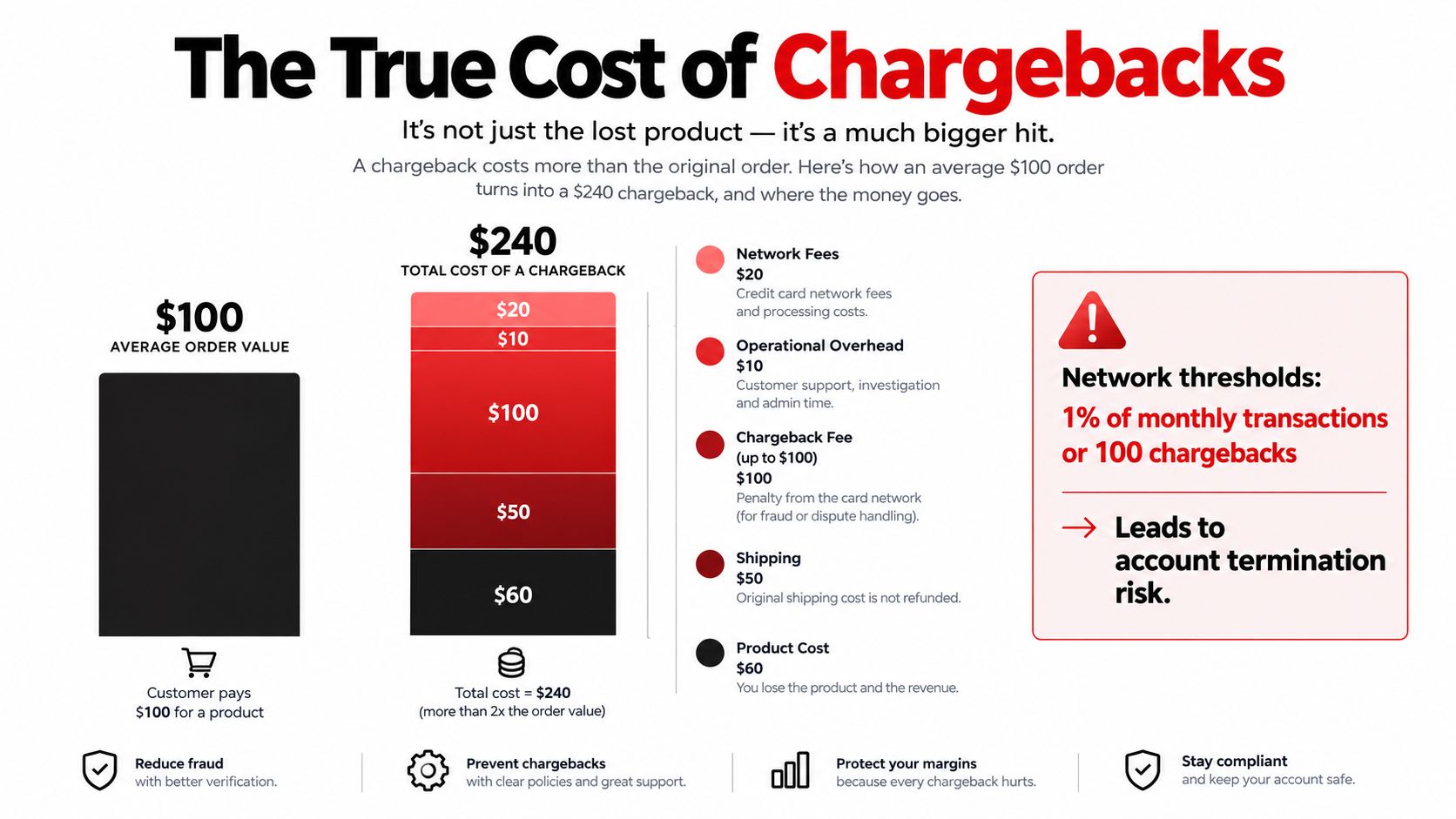
Network thresholds add another layer of exposure. Merchants should keep the chargeback ratio comfortably below 1%, ideally under about 0.65%, according to the chargeback risk guidance covering card-network monitoring. That guidance identifies Visa's 2026 excessive threshold as 1.5%. For Mastercard, the ECM tripwire is 1.5% or 100 or more chargebacks in a month. These figures are warning lines, not operating goals. Reaching them can lead to fees, monitoring, and stronger enforcement.
Why ratios require daily ownership
A monthly ratio can worsen quickly after order volume shifts or several disputes arrive together. Operations teams should monitor the underlying pattern, not only the headline percentage:
| Indicator | What it tells you |
|---|---|
| Disputes by order cohort | Whether a campaign, product, geography, or fulfillment batch is creating exposure |
| Reason-code mix | Whether the problem is criminal fraud, first-party misuse, or a merchant process error |
| Time from order to dispute | Where intervention may be possible, such as delivery communication or refund handling |
| Traffic source and session signals | Whether suspicious acquisition activity is feeding the order queue |
Payment gateways can reject some risky transactions. They cannot clarify refund terms, fix an unrecognizable billing descriptor, create a delivery trail, or clear a slow support queue. Evidence must exist before the dispute arrives, including order confirmation, customer messages, fulfillment records, delivery details, and policy acceptance.
For a practical breakdown of exposure beyond the transaction itself, review this guide to Shopify chargeback costs and early traffic control.
A rising ratio does not justify declining every uncertain order. Excessive friction creates false declines and frustrates legitimate customers. The stronger response is to identify where poor-quality traffic enters the funnel, restrict abusive sessions upstream, and apply deeper verification only when several risk signals converge.
A short visual explanation can help operations, support, and finance teams understand how chargeback costs and network thresholds interact:
The Shift Toward Friendly Fraud and First-Party Abuse
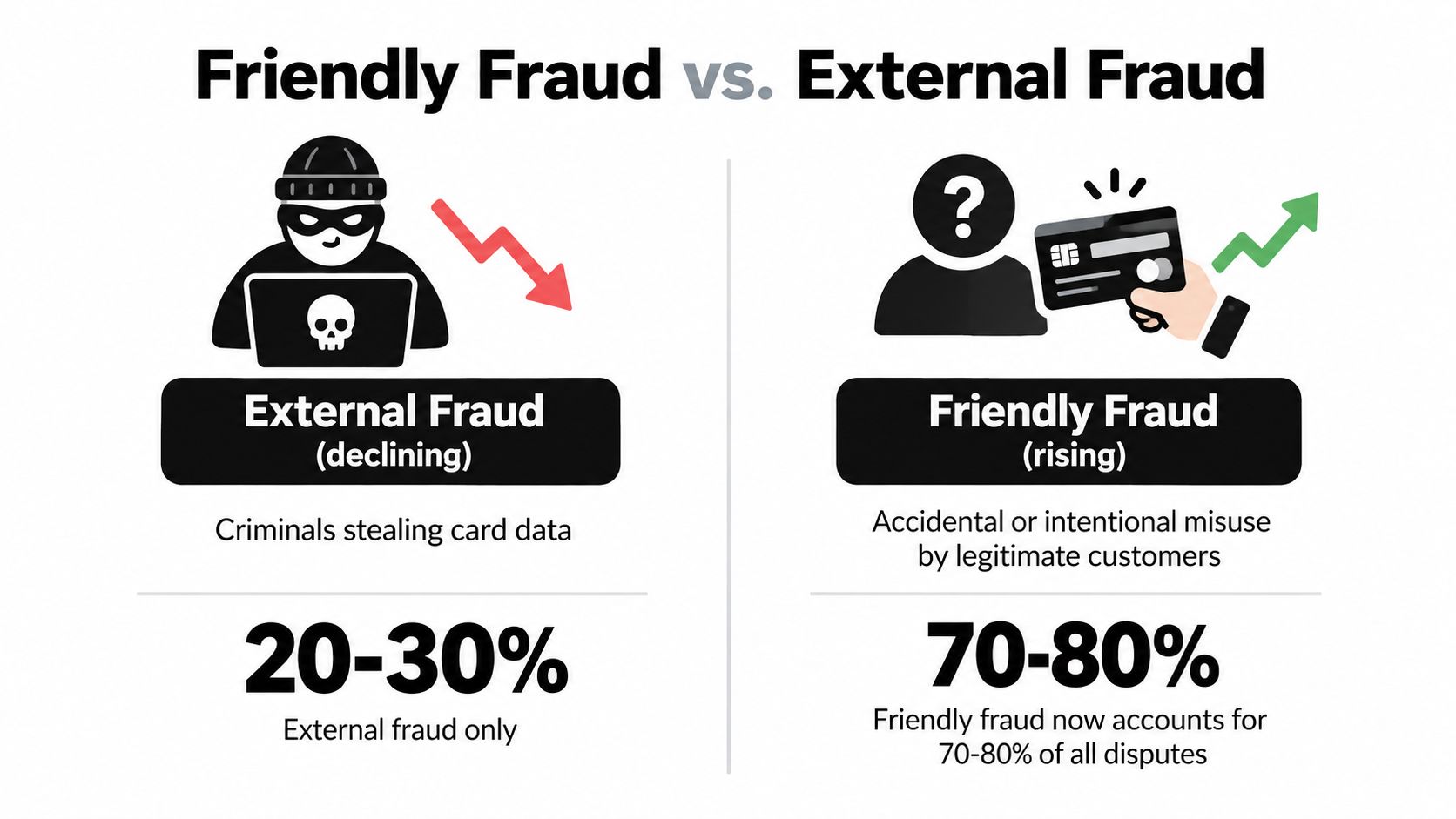
A valid card and a real customer account do not prove that a later dispute is legitimate. Many fraud programs still treat stolen-card activity as the main threat, while current reporting shows friendly fraud represents the majority of ecommerce disputes. One 2026 industry roundup estimates about 75% of cases, and another source places fraud-related chargebacks at roughly 80% overall in the chargeback statistics and trends analysis. The control strategy must address customer-driven misuse as well as unauthorized transactions.
The same source set identifies first-party fraud as the leading fraud type globally at 36% of reported fraud. Another industry report says first-party and third-party fraud together represent roughly 45% of merchant dispute volume. LexisNexis data cited in 2025 also records friendly fraud rising from 15% in 2023 to 36% in 2024 globally, as described in Sift's disputes report.
Why authentication doesn't solve first-party misuse
A buyer who knowingly disputes a genuine purchase can pass the same authentication checks as any other customer. CVV validation, address matching, and 3D Secure help assess unauthorized use, yet they do not show that the customer understood the refund terms, received the product, or contacted support before approaching the bank.
The merchant's own systems must supply that context. Build a record linking the transaction to the customer experience:
- Make the charge recognizable: Use a billing descriptor that matches the storefront or trading name customers remember.
- Set expectations before payment: Keep product details, shipping terms, subscription conditions, and cancellation instructions visible and specific.
- Confirm the order: Send a post-purchase message containing the item, amount, delivery destination, and support route.
- Document fulfillment: Preserve tracking, delivery confirmation, digital access records, and relevant customer communications.
- Resolve issues through support: Make refunds and returns easier to understand than a bank dispute.
The evidence required depends on the business model. A subscription merchant needs renewal notices and cancellation records. A physical-goods brand needs shipment and delivery evidence. A digital seller needs access logs and proof that the purchased service was made available. A single fraud score cannot replace these records.
Friendly fraud also includes accidental confusion. A household member may recognize the purchase while the cardholder does not, or a statement descriptor may differ from the brand shown in advertising. Clear communication prevents avoidable disputes. Structured evidence gives the merchant a stronger position when a buyer knowingly misuses the process.
How Bot Traffic and VPNs Inflate Fraud Risk
Bad traffic creates fraud pressure in several ways. Automated visitors can test stolen card details, probe checkout behavior, create accounts, harvest pricing, or submit forms at a speed that normal shoppers can't match. VPN and proxy use isn't automatically fraudulent, but masked access removes useful context and can make a transaction harder to evaluate.
The important distinction is classification. Blocking every visitor who uses a VPN can reject legitimate travelers, privacy-conscious shoppers, or customers on corporate networks. Allowing every masked session through without additional scrutiny gives abusive actors an easy way to obscure location and repeat behavior.
Classify before you score the order
A practical traffic review starts at the storefront edge:
- Identify automation patterns. Look for rapid requests, repeated navigation paths, unusual interaction timing, and bursts of account or cart activity.
- Separate masked sessions. Record VPN, proxy, and disposable-email signals as risk inputs, not automatic proof of abuse.
- Connect sessions to outcomes. Compare suspicious traffic with payment failures, canceled orders, refund requests, delivery complaints, and later disputes.
- Apply graduated actions. Allow low-risk visitors, challenge uncertain sessions, and block patterns that combine automation, masking, velocity, and payment anomalies.
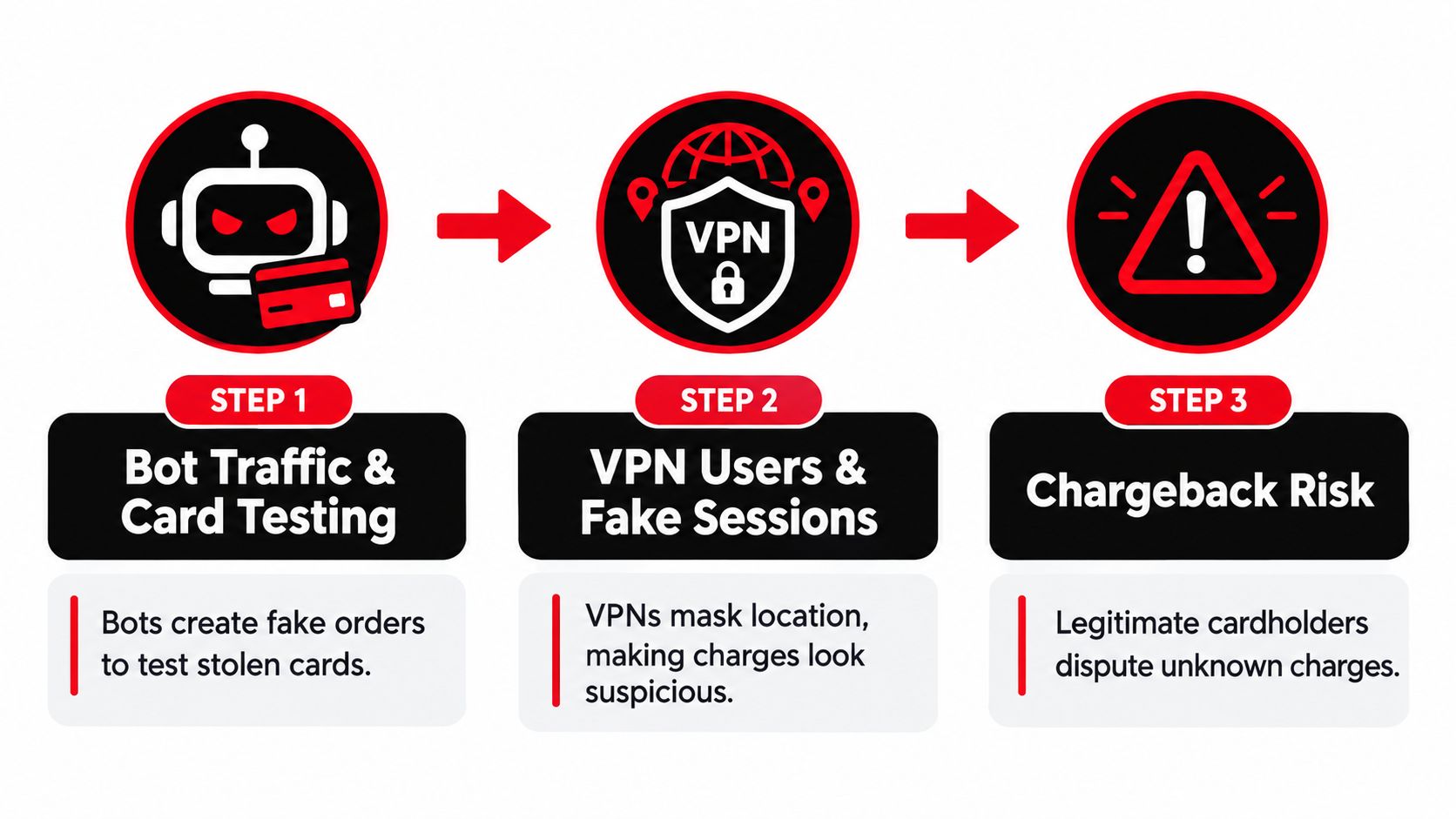
The point isn't to turn the storefront into a hostile checkpoint. It's to stop treating every checkout attempt as an isolated event. A bot that tests several cards, a masked session that creates multiple accounts, and an order routed to a high-risk destination form a connected pattern even when each individual signal looks inconclusive.
Keep analytics and fulfillment honest
Traffic filtering also protects decision-making. If automated sessions inflate product views, add-to-cart events, or checkout starts, marketing teams may interpret artificial activity as genuine demand. They can then increase spend, stock the wrong products, or judge a campaign by a conversion rate that includes visitors who were never capable of completing a purchase.
Use separate reporting for genuine visitors, suspicious sessions, and confirmed bad bots. Feed those classifications into fraud review and fulfillment workflows so the warehouse doesn't treat every paid order as equally trustworthy. The Shopify guide to bot traffic and VPN abuse offers a relevant framework for connecting storefront signals with order risk.
Early filtering won't eliminate friendly fraud, merchant mistakes, or every stolen-card attempt. It does reduce the number of contaminated sessions that reach the checkout and gives analysts better evidence when they investigate a disputed order.
Implementing Upstream Controls and Verification Rules
Rules work when they're tied to a clear business decision. “Block suspicious traffic” is too vague for an operations team. A useful rule states what signal matters, what action follows, and how the team will review false positives.
Start with service boundaries
Geo-blocking is appropriate when you don't ship to a region, don't support its payment methods, or can't provide customer service there. Restricting those visits protects catalog information and removes checkout attempts that the business can't fulfill. It shouldn't be used as a substitute for understanding domestic abuse or as a blanket response to every overseas shopper.
VPN and proxy detection needs similar care. Treat it as one layer in a decision model. A returning customer with consistent account, delivery, and order history may deserve a different response from a new account using a disposable email, a masked session, and repeated payment attempts.
Use graduated controls
A workable rule set might include:
- Low-risk path: Let consistent returning customers and ordinary sessions browse and purchase without extra friction.
- Review path: Ask for additional verification when several moderate signals appear together, such as unusual velocity and location inconsistency.
- Restricted path: Hold fulfillment or block sessions that combine automation, masking, repeated failed payments, and account abuse.
- Inventory protection: Apply stricter controls to products that attract scraping, resale activity, or concentrated fraud attempts.
- Velocity limits: Cap repeated account creation, coupon use, checkout attempts, and refund requests from the same behavioral pattern.
Avoid rules that rely on a single attribute. A VPN alone doesn't establish fraud. A country alone doesn't establish fraud. A high-value order alone doesn't establish fraud. The strongest controls combine independent signals and escalate only when the pattern justifies friction.
Review rules against operational outcomes, not just blocked sessions. Track approved orders, canceled orders, manual reviews, refunds, customer complaints, and disputes by rule path. If a rule blocks legitimate buyers without reducing downstream risk, narrow it or remove it.
Practical test: Every block should answer two questions. What behavior triggered it, and what evidence would justify allowing the customer through?
Keep an exception process for trusted customers and known business scenarios. Document why an exception exists, who approved it, and when the rule should be revisited. That discipline prevents temporary workarounds from becoming permanent gaps.
Protecting Post-Purchase Workflows and Support Queues
A merchant can stop a suspicious checkout and still lose control after payment. Fraudsters may use support forms to request address changes, pressure agents into issuing refunds, alter delivery instructions, or flood a help desk until a legitimate request receives rushed treatment. Bots can also contaminate marketing lists and review systems, making later investigation more difficult.
Consider a common operational sequence. A suspicious session places an order, then contacts support from a new disposable email address and claims the package was unauthorized or sent to the wrong location. If the support agent sees only the customer's message, the request may look ordinary. If the agent can see the order's traffic risk, VPN or proxy status, account history, payment attempts, and fulfillment state, the team can choose a controlled response instead of changing the order immediately.
Give support the right context
Support agents don't need raw security data with no explanation. They need an actionable profile:
- Risk tier: Whether the order is routine, requires review, or should be held.
- Identity consistency: Whether email, account, delivery, and session information align.
- Behavioral history: Whether the customer has repeated refund, cancellation, or address-change activity.
- Fulfillment evidence: Whether the order has shipped, arrived, or been accessed digitally.
- Approved actions: Which requests agents can complete and which require risk-team approval.
Native connections between traffic, commerce, support, email, and reviews keep the decision trail intact. For stores using Gorgias, the Securify Gorgias integration is one example of connecting fraud-risk context to support operations, including signals such as risk tier, fraud score, disposable-email detection, and VPN or proxy detection.
Protect the queue without punishing customers
Support controls should reduce abuse while preserving a simple route for legitimate refunds. Require verification before changing a shipping address or refunding an order with conflicting signals. Keep the original customer communication, order confirmation, delivery evidence, and policy acceptance attached to the case.
Don't let agents make decisions from memory or scattered systems. A unified record prevents one team from approving a refund while another is preparing a dispute response, and it gives managers a way to identify recurring patterns. The objective isn't to make support suspicious of every customer. It's to stop an unverified message from overriding the controls protecting inventory and revenue.
Building a Sustainable Fraud Prevention Strategy
Sustainable chargeback fraud prevention starts before checkout. If bots, VPN abuse, and masked sessions remain in acquisition reports, teams cannot distinguish genuine demand from automated activity. Clean traffic data gives operators a clearer view of how acquisition quality affects orders, refunds, support contacts, and disputes.
The operating principle is direct: don't wait for the dispute file to become your first fraud signal. Control risky traffic upstream, verify transactions according to their signals, preserve post-purchase evidence, and monitor network exposure before escalation becomes likely.
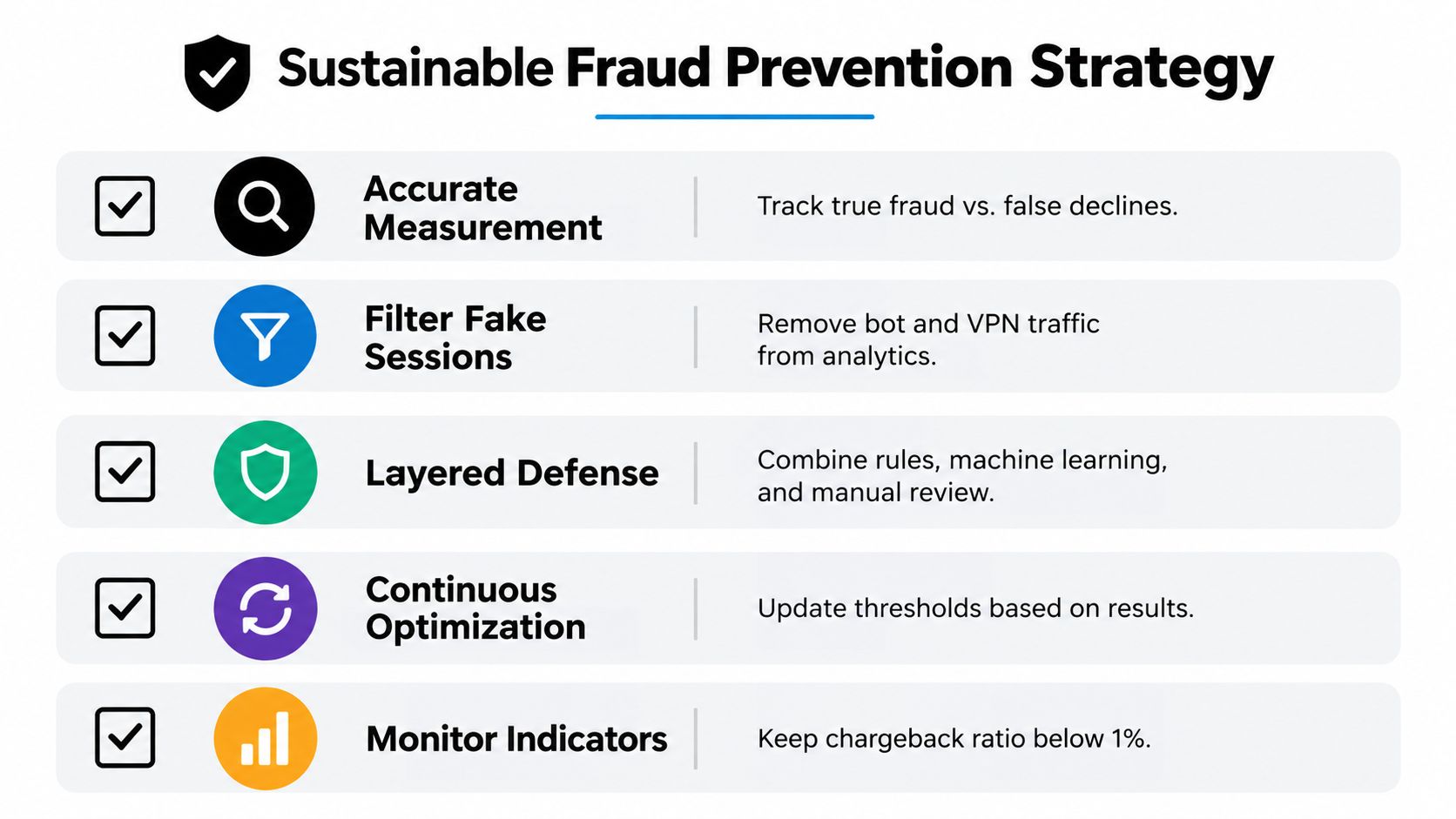
Prioritize the work in the right order
- Measure genuine traffic. Separate bots, masked sessions, VPN and proxy activity, and real visitors.
- Map the dispute path. Connect traffic source, session behavior, order details, fulfillment, support contacts, refunds, and reason codes.
- Set upstream rules. Apply service-area restrictions, velocity checks, network-risk signals, and graduated verification before payment review.
- Strengthen customer clarity. Keep billing descriptors, refund policies, order confirmations, cancellation flows, and delivery messages consistent.
- Protect connected systems. Pass risk context into support, marketing, reviews, and fulfillment tools.
- Review outcomes continuously. Compare blocked traffic, manual reviews, false declines, refunds, and disputes before changing thresholds.
Keep the network objective visible. As covered in the cost and thresholds section, set the operating target well inside the card-network monitoring lines rather than treating a threshold as a performance goal. The right buffer depends on transaction volume, product mix, fulfillment model, and dispute history. Waiting until a monitoring line is crossed leaves little time to correct traffic sources, verification rules, or support practices.
Where Securify fits
Shopify's fraud analysis tells you about a risky order after the payment is authorized. Securify works earlier, at the traffic and checkout layer, so the riskiest sessions never become orders you have to review, refund, or defend in a dispute. It blocks visitors by country, IP, and IP range, and stops bots, datacenter, VPN, proxy, and Tor traffic before checkout, which is where most of the upstream signals described above are visible. On the Growth plan, a checkout fraud filter rejects risky emails, phone numbers, and names through a Shopify checkout validation function, so the order is never created and there is nothing to cancel, refund, or dispute. Risk context also reaches support through the Gorgias integration mentioned earlier, and Shopify Flow triggers let you hold or tag what does get through. There is a free plan for country and IP rules; see Securify on the Shopify App Store. For orders that Shopify has already flagged, read what to do with a high-risk order.
Written with Outrank tool